The indie rock band Wye Oak wrestles with fear as a motivation for religious belief and unbelief in their song Dog’s Eyes.
Do you believe in God, or not? Take a moment to reflect. Now be honest with yourself: do you believe (or not) due to purely rational considerations? Do you hold onto this belief, not because it is driven by your desires, emotions and preferences, but because you think it is truly the best explanation of the world? Maybe, you want to insist that yes, you are a believer or nonbeliever solely due to a cold, detached, probabilistic assessment of the dizzying amount of arguments for and against God. But chances are, the answer to this question is no. You are a human being, after all. Your feelings are at least as much of a factor as the facts.
The indie rock band Wye Oak is probably my favorite band out there. Their music is gorgeous and their lyrics are poetic and compelling. But they are a secular band with some atheistic messages in their music that, as a Christian and a fan of theirs, I always wanted to address. I’ve found that Wye Oak’s messages are usually subtle and ambiguous, but there is at least one song which expresses one of the most articulate attacks on religious belief I’ve ever heard in music (but maybe I just haven’t listened to enough music).
What’s the attack, you may ask? Well, it’s about fear. Wye Oak suggests that (Christian) theists are subconsciously driven by existential terror to believe what they believe. In some cases, at least, they might have a point. Like I said, religious belief is difficult to disentangle from personal feelings, and fear is certainly no exception. But that sword cuts both ways.
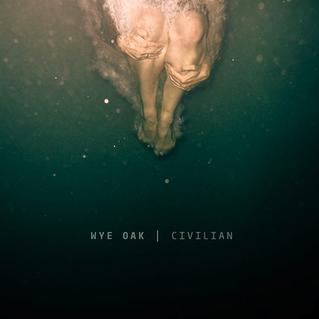
Dog’s Eyes
Perhaps Wye Oak’s most well known album is the 2011 album Civilian. One of the songs in this album is called Dog’s Eyes. It’s an excellent song, in my opinion. It’s also pretty anti-religion. This song opens with some pretty blunt lyrics:
Can’t see yourself in evolution
The history of our creation
So dogs eyes
Smiling
Scare you about dying1
Of course, Christian apologetics has come a long way since the 1925 Scopes Trial. Plenty of theists, and even Christians, believe that the Neo-Darwinian evolutionary paradigm and traditional theism (as well as biblical Christianity) are compatible. But this issue is irrelevant for our discussion, because I think that Wye Oak’s point has broader application than just the creation-evolution debate. In an interview, Jenn Wasner, the lead singer of Wye Oak, addresses the song and explains,
“I think some people have a really hard time being like, ‘I’m not an animal, you know, I’m something else. We’re not monkeys.’ You know, that thing of just like, ‘Oh, you’re just afraid. You’re just afraid to die, like you’re afraid that you will waste away…You will waste away into eternity, like every other living creature on this planet.”2
So this is the point: theists believe that human beings are specially created by God (whether by evolution or a more direct method of creation) and that there is an afterlife. But they believe this because they are afraid of the alternative. The alternative says that there is no God, that human beings are nothing more than clumps of matter produced by blind evolutionary processes, just like dogs, and that when they die, there is no afterlife, only eternal nothingness. Our theistic rejection of atheism is not rational, but is rather more like a coping mechanism.
Wye Oak are certainly not the first to have made this point. Sigmund Freud also thought that theistic belief was a kind of psychological coping mechanism or “wish-fulfillment”. He writes, “the terrifying impression of helplessness in childhood aroused the need for protection-for protection through love which was provided by the father; and the recognition that this helplessness lasts throughout life made it necessary to cling to the existence of a father, but this time a more powerful one. Thus the benevolent rule of a divine Providence allays our fear of the dangers of life…”.3
It’s really not a very novel argument. We’ve heard it all before. Religion is a crutch, a way to cope, something you run to when you’re being shot at in a foxhole or something like that. Perhaps, as some atheists have suggested, religious belief is something programmed into us by evolution because it’s biologically advantageous. There are a few theistic responses we can offer to this kind of objection.
First of all, to argue that a belief is false by pointing to its origin, or how someone came to acquire said belief, is not a sound argument. It commits the genetic fallacy; even if the way you came to acquire a belief is strange or illegitimate, it does not follow that your belief itself is false. Maybe someone has a phobia of flat Earth theory (call it “flat-phobia”), and that is the only reason he believes in a round Earth; let’s say that “flat-phobia” is the only reason anyone believes in a round Earth. It doesn’t follow from this that it is false that the Earth is round. So maybe religious or theistic belief is a product of irrational or arational motivations, like fear, or maybe evolutionary processes are responsible. It still does not follow that theism or religious belief is false.
But could religious belief be irrational, or at least not rationally justified? Obviously “flat-phobia” is not a good reason to believe in a round Earth, so could religious belief be irrational in the same way? The Christian philosopher Alvin Plantinga has argued that the answer to this question is: it depends. It ultimately depends on which worldview is true. Plantinga argues,
“What you properly take to be rational or warranted depends upon what sort of metaphysical and religious stance you adopt…the dispute as to whether theistic belief is rational (warranted) can’t be settled just by attending to epistemological considerations; it is at bottom not merely an epistemological dispute, but a metaphysical or theological dispute”.4
If atheism is true, then religious belief is (probably) irrational, for likely the same reasons that Wye Oak, Freud, and evolutionary biologists offer. On the other hand, if theism is true, then God has likely provided us with the cognitive faculties to accurately “detect” Him, so religious belief is (probably) rational.5 In short, Plantinga concludes that this whole Freudian type objection fails. You cannot dismiss religious belief as irrational without first determining whether or not religious belief is true.
So I think the most interesting part about Wye Oak’s treatment of religion is not their direct attack of it, but rather the way that they wrestle with the testimony of God and the culpability of unbelief. Because maybe it is here that we can discover that fear and other irrational or arational motivations for belief are not uniquely religious phenomena. There is no “free lunch” for atheism.

God’s Eye
Through Dog’s Eyes, we’ve seen religious belief from a secular lens. But what about secular belief from a Christian perspective? Could it be that atheists are not solely motivated by “rational” considerations with respect to their beliefs? Maybe. Maybe the problem with unbelief is not ignorance, but the same type of emotional resistance that atheists accuse Christians of having.
The next two stanzas of Dog’s Eyes explores Wye Oak’s struggle with religious belief. It turns out that they can’t fully escape the lingering idea that God really is with us. Here is what Wasner sings:
I can’t shake the superstition
Jesus give me your permission
And God’s eye
Looks in
Like a ghost you don’t believe in6
And in the next stanza, Wasner sings:
Someone let me live this way
And I cannot get rid of it7
What exactly is Wye Oak admitting here? Why are they so haunted by religion, if they think it’s just a fear-based illusion? In the aforementioned interview, Wasner says,
“There was definitely some religion in my upbringing. I wasn’t in the most strictly religious family, but it was there. And also, it’s just sort of, it’s ambient, it’s in the air, like we pick it up, you know, it’s around.”8
I’ve found these particular lyrics as well as Wasner’s statement to be very interesting. In Christian theology and apologetics, much is made of God’s “general revelation”. This is the idea that God has made Himself known to all people as the moral lawgiver through their conscience and as the creator of the universe through the evident signs of design in creation. This theological concept is based off of Paul’s reflections in Romans 1:
“The wrath of God is being revealed from heaven against all the godlessness and wickedness of people, who suppress the truth by their wickedness, since what may be known about God is plain to them, because God has made it plain to them. For since the creation of the world God’s invisible qualities—his eternal power and divine nature—have been clearly seen, being understood from what has been made, so that people are without excuse” (Romans 1:18-20).
So from a Christian perspective, the reason that unbelievers “can’t shake the superstition”, and feel like “God’s eye looks in”, and even perversely feel the need to ask Jesus for permission to disbelieve in Him, is because they know that God exists, as God has made it plain to them. As Wasner puts it: it’s in the air.

Cosmic Wish-fulfillment
So how does fear come into the picture for the atheist? Here is what Scripture says:
“This is the verdict: Light has come into the world, but people loved darkness instead of light because their deeds were evil. Everyone who does evil hates the light, and will not come into the light for fear that their deeds will be exposed” (John 3:19-20).
Might this be why unbelievers wrestle with “God’s eye” looking in? Wasner says,
“I think the more poisonous aspects of religion, of organized religion, are sort of the cause of much of human suffering, and pain and violence. And not even if you want to, you know, just talk about on a personal scale, rather than a global scale, shame, shame, it’s just a source of so much shame. And that feeling of ‘I am bad, I am wrong.'”9
I don’t think Wasner is alone here. I think a lot of people distrust the church due to its “fire and brimstone” messages. Whenever the church becomes legalistic in its teaching and treatment of people and it focuses solely on shaming people and saying falsehoods like “God hates gays” and telling people that they are going to hell (period, no gospel afterwards), then the church has become a stumbling block and a failed witness. This sort of religious trauma is something that Jesus can speak to and heal.
However, I suspect that the “shame” which Wasner, and many non-Christians, speak of, is not just directed at illegimate Christian teaching and practices. Rather, I think lots of people just don’t like the idea that they are a sinner. Everyone wants to think of themselves as a good person. But this is not what the Bible teaches. Paul says, “for all have sinned and fall short of the glory of God” (Romans 3:23). And so all people are deserving of God’s wrath. In light of this, of course people are afraid. They know they are guilty, and, like the murderer on death row, know they deserve punishment. Of course people want to deny that God exists or that Christianity is true.
The atheist philosopher Thomas Nagel admits,
“I want atheism to be true and am made uneasy by the fact that some of the most intelligent and well- informed people I know are religious believers. It isn’t just that I don’t believe in God and, naturally, hope that I’m right in my belief. It’s that I hope there is no God! I don’t want there to be a God; I don’t want the universe to be like that. My guess is that this cosmic authority problem is not a rare condition and that it is responsible for much of the scientism and reductionism of our time.”10
So, ironically, it seems that the fear narrative can be turned on its head. If Christianity is true, it is atheists who are motivated, not purely by rational considerations, but by fear, to reject God. It is God’s eye that scares them about dying (only this time, the death in question is spiritual death). Plantinga writes,
“Indeed, unbelief can also be seen as resulting from wish-fulfillment-a result of the desire to live in a world without God, a world in which there is no one to whom I owe worship and obedience.”11
The Antitode to Fear
Alright, but so what? So what if, given Christianity, atheists are the irrational ones? Given atheism, Christians are the irrational ones, so it seems we’re even. Like Plantinga said, we are in a sort of epistemic deadlock. So who cares? Maybe we should just leave each other alone.
But how can we? Someone has to be right. And depending on who’s right, someone may have good reason to fear. So who is right? I will not try to answer this question here, but (no surprise) I think the evidence points towards Christian theism as being true. And so, to the atheist I will say, take Nagel’s discomfort seriously. This is no stalemate.
But that is not how I want to end this article, especially because it is about Wye Oak’s music. It was a bit painful for me to write this, because I love and admire the band so much, and especially Jenn Wasner and all her other music. So there is no personal hostility towards the band; in fact, I was partly inspired to write this out of love for them. And out of love for all non-Christians and atheists, I want to end by saying that the Christian message is not primarily about hell. It is primarily about hope. In the Wye Oak song It Was Not Natural, Wasner sings,
It was not natural, all along
Only human hate could give us something so unforgiving12
But when it comes to Christ, nothing could be further from the truth. Though Paul says that “all have sinned and fallen short of the glory of God”, in the very next verse he says, “and all are justified freely by his grace through the redemption that came by Christ Jesus” (Romans 3:24). Christ has died for everyone, theist and atheist, believer and nonbeliever, and everyone can accept God’s forgiveness and free offer of salvation through Christ. For “as far as the east is from the west, so far has He removed our transgressions from us” (Psalm 103:12). Don’t ask Jesus for His permission to deny Him. Ask Him for freedom from sin and shame.
- Wye Oak, “Dogs Eyes,” recorded March 2011, track 4 on Civilian, Merge Records, audio. ↩︎
- “The Making of Civilian by Wye Oak,” Life of the Record, accessed March 2026, https://lifeoftherecord.com/wye-oak-notes. ↩︎
- Sigmund Freud, The Future of an Illusion, 30. ↩︎
- Alvin Plantinga, Knowledge and Christian Belief, 40. ↩︎
- I think this would be true even if other arational or irrational factors, such as fear, motivated religious belief. As long as our God-given cognitive faculties were functioning well, and would in fact “detect” God, then our theistic belief would be rational, our emotional motivations notwithstanding. In fact, it might be that, given theism, a proper fear of mortality and the prospect of divine judgment is a rational motivation for religious belief. ↩︎
- Wye Oak, “Dogs Eyes,” audio. ↩︎
- Ibid. ↩︎
- “The Making of Civilian by Wye Oak,” Life of the Record, https://lifeoftherecord.com/wye-oak-notes. ↩︎
- Ibid. ↩︎
- Thomas Nagel, The Last Word, 130-131. Emphasis mine. ↩︎
- Plantinga, Knowledge and Christian Belief, 43-44. ↩︎
- Wye Oak, “It Was Not Natural,” recorded April 2018, track 5 on The Louder I Call, the Faster It Runs, Merge Records, audio. ↩︎
No Comments on Wye Oak, Religious Belief, and Fear