Author: Jacob LoCascio

Interstellar: A Test of Faith

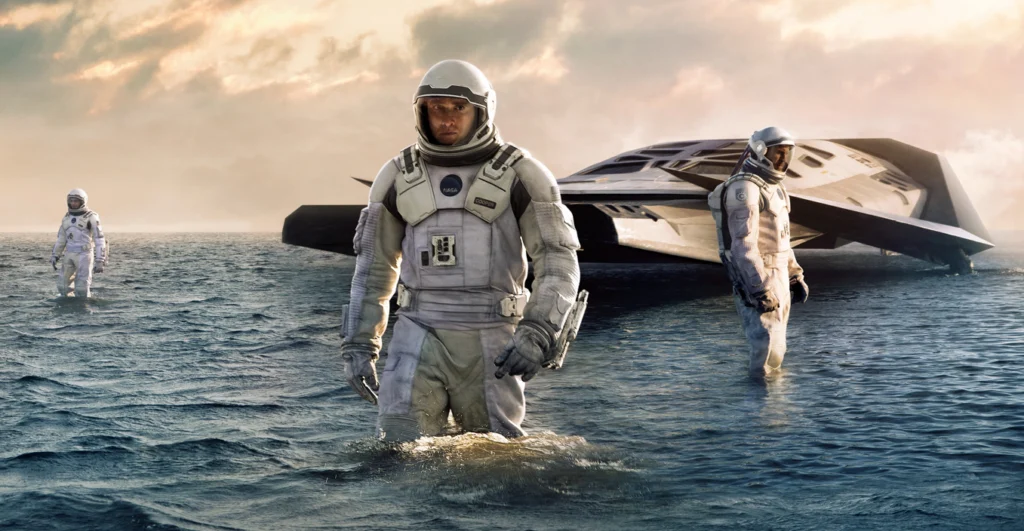
The movie Interstellar grapples with faith and the grueling endurance it requires when it is put to the test by time and doubt.

As we witness the blood soaked horrors of the 21st century in real time, faith can be a difficult thing to hold on to. Why think that relief is coming, when history has made it abundantly clear that it never has? This problem is a bit unique for Christians, for our Holy Scriptures promise us that Christ will return one day, and that we will all rise from the dead to a glorious new existence, and that sickness and pain and death will be finally done away with. But it has been over 2000 years since that promise was made. 

The struggle to persist in faith is a key theme in Christopher Nolan’s masterpiece film Interstellar. In this movie, Joseph Cooper, a former NASA pilot, accepts a mission to find inhabitable planets in another galaxy for the people of earth to populate, as Earth will soon be uninhabitable. Neither Cooper nor his kids (his daughter, Murph, and son, Tom) have any idea when (or if) he’s coming back, and so Murph, Tom and the rest of Earth’s population must wait in uncertainty for his return. 

Long Delays and Lost Faith

The first planet that Cooper’s crew explores is called Miller’s planet, where 1 hour of time equals 7 years on earth due to time dilation. Things almost immediately go awry here, and the crew is forced to wait on Miller’s planet until the ship is ready to fly again. While for them, they only waited a few hours, the delay cost them 23 years of Earth’s time.

Cooper, knowing he just missed a large chunk of his kids’ lives, plays back all the messages he has received from them in that 23 year time span. He watches his son, Tom, grow from a 15 year old boy to a married man to a father. Eventually, it becomes clear that Tom son has stopped believing that he will return. Tom says:

“You aren’t listening to this, I know that. All these messages are just drifting out there in the darkness. Lois says that I have to let you go, and so I guess I’m letting you go. I don’t know wherever you are dad, but I hope that you’re at peace, and goodbye.”

That kind of message is jarring for us as a viewer, since we have been following Cooper’s mission from his perspective, and for him it’s only been around 3 hours on Miller’s planet. To see Tom lose faith in his father’s return in what seems like such a short time for us is devastating.

But think about it. Tom has been waiting on Earth for 23 years. That wait is a longer time span than all the 15 years he spent with his father. Our lives are measured in years, but they are lived in hours, minutes, and seconds, and each discrete bit of time presents us with the same demand to persevere in faith. Each morning, we wake up, and of course, there is no good news waiting for us. We start to question. Maybe we were fools to believe for so long. 

Us Christians can relate to this struggle. In Revelation 22:7-21, Jesus declares, “And behold, I am coming soon”. Soon? It is now 2026. Generations and generations of Christians have come and gone since then, each believing themselves to be the last, each believing that they will see the second coming of Christ in their lifetimes.

And the problem isn’t just eschatological. In John 16:23, Jesus says, “Very truly I tell you, my Father will give you whatever you ask in my name”. And so, we ask God for healing, or financial relief, or sanctification. And then we wait…and wait…and wait. Is God listening? Or are all our prayers just drifting out there in the darkness? 

Abandoned

While Tom has lost faith, it seems that Murph still has some semblance of hope that her father will come back. In a message she sends to her father, she says,

“I never made one of these when you were still responding cause I was so mad at you for leaving. And then when you went quiet, it seemed like I should live with that decision, and I have. But today’s my birthday. And it’s a special one, because you told me…you once told me that when you came back we might be the same age. And today I’m the age you were when you left. So it’d be a real good time for you to come back.”

Ironically, though Tom has been sending all the messages until now, while Murph was silent, it is Tom who gives up on the prospect of his father returning. But Murph still hasn’t let her father go. Will her faith be rewarded? Sadly, not yet. Her faith crisis is about to get much, much worse.

Professor Brand, the genius behind the whole operation to save the people of earth and find a habitable planet, reveals a terrible secret to Murph on his deathbed. For years, Dr. Brand has told the staff at NASA that “plan A”, or the plan to rescue everyone on Earth and transport them to a habitable planet, is feasible. “Plan B”, or the plan to use frozen embryos to populate a habitable planet (while everyone on Earth perished) was supposed to be the last ditch backup. But it turns out that Professor Brand had given up on plan A for a long time. He tells Murph: 

“You had faith. All those…all those years, I asked you to have faith. I wanted you to believe that your father would come back.”

But in the Professor’s eyes, that faith was misplaced from the start. He confesses,

 “I lied, Murph. I lied to you. There was no need for him to come back. There’s no way to help us.”

As another scientist, Dr. Mann, later explains, Professor Brand lacked the means to obtain the data needed to solve the gravity equation. NASA needed the solution to this equation in order to create a spaceship which could transport all the people off of Earth. So Professor Brand abandoned plan A and settled for plan B, which is what Cooper’s mission was actually supposed to accomplish.

After the Professor dies, a heartbroken Murph sends another message to Cooper’s spacecraft, addressing both Amelia Brand (the daughter of the Professor and a member of Cooper’s mission) and Cooper. She says,

“Brand, did you know? He told you, right? You knew. This was all a sham. You left us here. To suffocate. To starve. Did my father know, too? Dad, I just want to know…if you left me here to die. I just have to know.”

Of course, Cooper cannot respond to her, as his messages don’t get back to Earth. So instead, he has to watch helplessly as his daughter begins to believe that her father abandoned her to save his own skin. 

It’s difficult enough to persevere in faith when we must endure through long stretches of time without knowing when or if relief is coming. It’s even more difficult when we are presented with a reason to believe that our faith has been false all along. For Murph, it was discovering Professor Brand’s lie, and for Christians, it can be any number of intellectual objections and/or emotional doubts. 

So maybe during these moments we start to seriously question our faith. Not only are we slogging through each day holding on to unfulfilled hope, but now we may be angry with God, and now we may be facing intellectual pressure to give up our beliefs. The allure of apostasy hangs over our heads. 

While arguing with her brother, Murph reveals that she too has lost faith in her father’s return after the Professor’s fateful confession. 

Tom says, “You’re gonna save everybody? Cause dad couldn’t do it.” And Murph responds, “Dad didn’t even try! Dad just abandoned us! He left us here to die.”

A Strange Sort of Providence

Are you familiar with the doctrine of divine providence? According to William Lane Craig, “Divine providence concerns God’s governance or supervision of the world-all that happens”.1 A good biblical example of this doctrine is Romans 8:28, in which Paul says, “And we know that in all things God works for the good of those who love him, who have been called according to his purpose.” So we can say that God providentially orders the events of history so that ultimately everything contributes to the flourishing of God’s children. 

There is a kind of providence at work in Interstellar. During Murph’s childhood, all sorts of seemingly paranormal events happen in her bedroom. Books fall from her bookshelf at random without her having touched them, and one time they even spell out a message in Morse code, which reads: STAY. Murph thinks it is a ghost. Later, during a dust storm, the dust on the floor of Murph’s rooms spell out a message in binary. Once again, Murph believes that this is the work of her ghost, but Cooper believes that it is due to a gravitational anomaly. The dust message turns out to be coordinates to a top secret NASA facility, which Cooper and Murph travel to, and where Cooper is recruited for his mission.

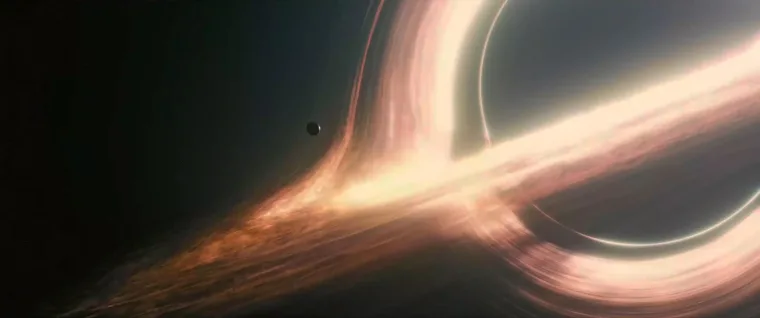
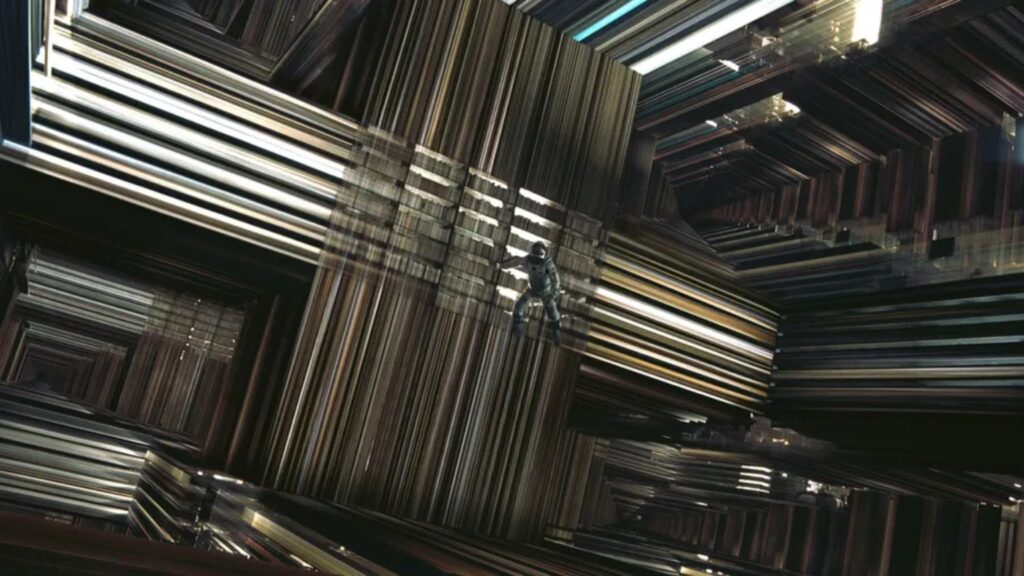
Much later in the movie, Cooper falls into a black hole, and finds himself in a tesseract structure which contains infinite copies of Murph’s bedroom from different moments in time. Cooper finds that he can manipulate gravity in Murph’s bedroom across time, enabling him to do things like push the books off of Murph’s bookshelf. At first, in grief from missing all those years of Murph’s life, he tries to get his past self to stay with Murph instead of leaving her to go on his mission. He pushes the books off of Murph’s bookshelf to communicate the message: STAY. Cooper turns out to be Murph’s ghost all along. 

But Cooper can’t change the past. So he decides to use his power to try to save the future. He manipulates the dust in Murph’s room to communicate the coordinates to the NASA facility to his past self. And then, using Morse code, he transmits the data which was required to solve the gravity equation into Murph’s watch (which he gave her before he went on his mission, and which she left in her childhood bedroom). As an adult, Murph goes back to her room and recovers the watch, discovers the data, and uses it to complete the gravity equation, thus enabling humanity to construct the spacecraft needed to leave Earth. 

When I first watched this scene, I couldn’t help but think of the doctrine of divine providence. In the tesseract, Cooper affects past phenomena in Murph’s bedroom, phenomena which are witnessed by his past self and past Murph. Witnessing the phenomena gets them to act, thus setting the events of the story in motion. Divine providence is kind of like this. God puts us in situations to get us to act, and then uses our actions to accomplish His purposes. 

Moreover, God also allows evil to happen for good reasons. In the tesseract, Cooper was powerless to prevent his past self from leaving his daughter behind to go on his mission, but ultimately Cooper needed to go on his mission in order to save humanity. In a similar way, by allowing certain actions and events to happen, including sinful actions and horrible events, God can achieve great goods. So, after reuniting with his brothers who once threw him down a well, Joseph says confidently, “As for you, you meant evil against me, but God meant it for good” (Genesis 50:20). 

So how does this relate to faith and doubt? Well, going back to Murph, she experiences a revival in her faith after finding the watch. In her childhood bedroom, she realizes that her dad was her ghost, and that her dad encoded the data into her watch for her to find. She then rushes out of the house, and exclaims to her brother, 

“He came back! It was him, all this time, I didn’t know it was him. Dad’s gonna save us.”

It’s a beautiful moment, because Murph realizes that her father never abandoned her. Rather, all this time he was working to save her and the whole human race, and now he has given her the information needed to do exactly that.

So while we wait for the Lord, we must remember that God is working everything for good. He has not abandoned us. Rather, He is enacting His perfect plan to bring salvation and eternal joy to all who trust in Him. When He finally comes back, it will be the right time, the proper culmination of our divinely ordained story. And once we remember that, it becomes a little easier to wait, “knowing that in the Lord [our] labor is not in vain” (1 Corinthians 15:58). And instead of a watch as evidence of God’s providence, we have the Bible, God’s love letter to us, as well as the whole cosmos which testifies to us the glory, majesty and lovingkindness of the Lord.

  1. Craig, William Lane. “Doctrine of Creation (Part 10): Divine Providence.” Reasonable Faith, November 6, 2024. https://www.reasonablefaith.org/podcasts/defenders-podcast-series-4/doctrine-of-creation/doctrine-of-creation-part-10-divine-providence. ↩︎
No Comments on Interstellar: A Test of Faith

Wye Oak, Religious Belief, and Fear

The indie rock band Wye Oak wrestles with fear as a motivation for religious belief and unbelief in their song Dog’s Eyes.

Do you believe in God, or not? Take a moment to reflect. Now be honest with yourself: do you believe (or not) due to purely rational considerations? Do you hold onto this belief, not because it is driven by your desires, emotions and preferences, but because you think it is truly the best explanation of the world? Maybe, you want to insist that yes, you are a believer or nonbeliever solely due to a cold, detached, probabilistic assessment of the dizzying amount of arguments for and against God. But chances are, the answer to this question is no. You are a human being, after all. Your feelings are at least as much of a factor as the facts. 

The indie rock band Wye Oak is probably my favorite band out there. Their music is gorgeous and their lyrics are poetic and compelling. But they are a secular band with some atheistic messages in their music that, as a Christian and a fan of theirs, I always wanted to address. I’ve found that Wye Oak’s messages are usually subtle and ambiguous, but there is at least one song which expresses one of the most articulate attacks on religious belief I’ve ever heard in music (but maybe I just haven’t listened to enough music). 

What’s the attack, you may ask? Well, it’s about fear. Wye Oak suggests that (Christian) theists are subconsciously driven by existential terror to believe what they believe. In some cases, at least, they might have a point. Like I said, religious belief is difficult to disentangle from personal feelings, and fear is certainly no exception. But that sword cuts both ways. 

Dog’s Eyes

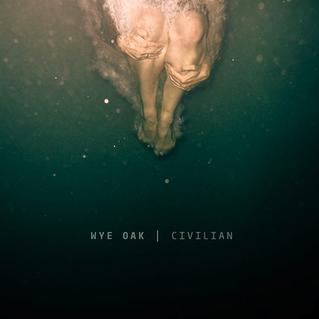
Perhaps Wye Oak’s most well known album is the 2011 album Civilian. One of the songs in this album is called Dog’s Eyes. It’s an excellent song, in my opinion. It’s also pretty anti-religion. This song opens with some pretty blunt lyrics:

Can’t see yourself in evolution
The history of our creation
So dogs eyes
Smiling
Scare you about dying
1

Of course, Christian apologetics has come a long way since the 1925 Scopes Trial. Plenty of theists, and even Christians, believe that the Neo-Darwinian evolutionary paradigm and traditional theism (as well as biblical Christianity) are compatible. But this issue is irrelevant for our discussion, because I think that Wye Oak’s point has broader application than just the creation-evolution debate. In an interview, Jenn Wasner, the lead singer of Wye Oak, addresses the song and explains, 

“I think some people have a really hard time being like, ‘I’m not an animal, you know, I’m something else. We’re not monkeys.’ You know, that thing of just like, ‘Oh, you’re just afraid. You’re just afraid to die, like you’re afraid that you will waste away…You will waste away into eternity, like every other living creature on this planet.”2 

So this is the point: theists believe that human beings are specially created by God (whether by evolution or a more direct method of creation) and that there is an afterlife. But they believe this because they are afraid of the alternative. The alternative says that there is no God, that human beings are nothing more than clumps of matter produced by blind evolutionary processes, just like dogs, and that when they die, there is no afterlife, only eternal nothingness. Our theistic rejection of atheism is not rational, but is rather more like a coping mechanism. 

Wye Oak are certainly not the first to have made this point. Sigmund Freud also thought that theistic belief was a kind of psychological coping mechanism or “wish-fulfillment”. He writes, “the terrifying impression of helplessness in childhood aroused the need for protection-for protection through love which was provided by the father; and the recognition that this helplessness lasts throughout life made it necessary to cling to the existence of a father, but this time a more powerful one. Thus the benevolent rule of a divine Providence allays our fear of the dangers of life…”.3

It’s really not a very novel argument. We’ve heard it all before. Religion is a crutch, a way to cope, something you run to when you’re being shot at in a foxhole or something like that. Perhaps, as some atheists have suggested, religious belief is something programmed into us by evolution because it’s biologically advantageous. There are a few theistic responses we can offer to this kind of objection.

First of all, to argue that a belief is false by pointing to its origin, or how someone came to acquire said belief, is not a sound argument. It commits the genetic fallacy; even if the way you came to acquire a belief is strange or illegitimate, it does not follow that your belief itself is false. Maybe someone has a phobia of flat Earth theory (call it “flat-phobia”), and that is the only reason he believes in a round Earth; let’s say that “flat-phobia” is the only reason anyone believes in a round Earth. It doesn’t follow from this that it is false that the Earth is round. So maybe religious or theistic belief is a product of irrational or arational motivations, like fear, or maybe evolutionary processes are responsible. It still does not follow that theism or religious belief is false.

But could religious belief be irrational, or at least not rationally justified? Obviously “flat-phobia” is not a good reason to believe in a round Earth, so could religious belief be irrational in the same way? The Christian philosopher Alvin Plantinga has argued that the answer to this question is: it depends. It ultimately depends on which worldview is true. Plantinga argues,

“What you properly take to be rational or warranted depends upon what sort of metaphysical and religious stance you adopt…the dispute as to whether theistic belief is rational (warranted) can’t be settled just by attending to epistemological considerations; it is at bottom not merely an epistemological dispute, but a metaphysical or theological dispute”.4

If atheism is true, then religious belief is (probably) irrational, for likely the same reasons that Wye Oak, Freud, and evolutionary biologists offer. On the other hand, if theism is true, then God has likely provided us with the cognitive faculties to accurately “detect” Him, so religious belief is (probably) rational.5 In short, Plantinga concludes that this whole Freudian type objection fails. You cannot dismiss religious belief as irrational without first determining whether or not religious belief is true.

So I think the most interesting part about Wye Oak’s treatment of religion is not their direct attack of it, but rather the way that they wrestle with the testimony of God and the culpability of unbelief. Because maybe it is here that we can discover that fear and other irrational or arational motivations for belief are not uniquely religious phenomena. There is no “free lunch” for atheism.

God’s Eye

Through Dog’s Eyes, we’ve seen religious belief from a secular lens. But what about secular belief from a Christian perspective? Could it be that atheists are not solely motivated by “rational” considerations with respect to their beliefs? Maybe. Maybe the problem with unbelief is not ignorance, but the same type of emotional resistance that atheists accuse Christians of having. 

The next two stanzas of Dog’s Eyes explores Wye Oak’s struggle with religious belief. It turns out that they can’t fully escape the lingering idea that God really is with us. Here is what Wasner sings:

I can’t shake the superstition
Jesus give me your permission
And God’s eye
Looks in
Like a ghost you don’t believe in
6

And in the next stanza, Wasner sings:

Someone let me live this way
And I cannot get rid of it
7

What exactly is Wye Oak admitting here? Why are they so haunted by religion, if they think it’s just a fear-based illusion? In the aforementioned interview, Wasner says,

“There was definitely some religion in my upbringing. I wasn’t in the most strictly religious family, but it was there. And also, it’s just sort of, it’s ambient, it’s in the air, like we pick it up, you know, it’s around.”8

I’ve found these particular lyrics as well as Wasner’s statement to be very interesting. In Christian theology and apologetics, much is made of God’s “general revelation”. This is the idea that God has made Himself known to all people as the moral lawgiver through their conscience and as the creator of the universe through the evident signs of design in creation. This theological concept is based off of Paul’s reflections in Romans 1:

“The wrath of God is being revealed from heaven against all the godlessness and wickedness of people, who suppress the truth by their wickedness, since what may be known about God is plain to them, because God has made it plain to them. For since the creation of the world God’s invisible qualities—his eternal power and divine nature—have been clearly seen, being understood from what has been made, so that people are without excuse” (Romans 1:18-20). 

So from a Christian perspective, the reason that unbelievers “can’t shake the superstition”, and feel like “God’s eye looks in”, and even perversely feel the need to ask Jesus for permission to disbelieve in Him, is because they know that God exists, as God has made it plain to them. As Wasner puts it: it’s in the air. 

Cosmic Wish-fulfillment

So how does fear come into the picture for the atheist? Here is what Scripture says:

“This is the verdict: Light has come into the world, but people loved darkness instead of light because their deeds were evil. Everyone who does evil hates the light, and will not come into the light for fear that their deeds will be exposed” (John 3:19-20). 

Might this be why unbelievers wrestle with “God’s eye” looking in? Wasner says,

“I think the more poisonous aspects of religion, of organized religion, are sort of the cause of much of human suffering, and pain and violence. And not even if you want to, you know, just talk about on a personal scale, rather than a global scale, shame, shame, it’s just a source of so much shame. And that feeling of ‘I am bad, I am wrong.'”9

I don’t think Wasner is alone here. I think a lot of people distrust the church due to its “fire and brimstone” messages. Whenever the church becomes legalistic in its teaching and treatment of people and it focuses solely on shaming people and saying falsehoods like “God hates gays” and telling people that they are going to hell (period, no gospel afterwards), then the church has become a stumbling block and a failed witness. This sort of religious trauma is something that Jesus can speak to and heal.

However, I suspect that the “shame” which Wasner, and many non-Christians, speak of, is not just directed at illegimate Christian teaching and practices. Rather, I think lots of people just don’t like the idea that they are a sinner. Everyone wants to think of themselves as a good person. But this is not what the Bible teaches. Paul says, “for all have sinned and fall short of the glory of God” (Romans 3:23). And so all people are deserving of God’s wrath. In light of this, of course people are afraid. They know they are guilty, and, like the murderer on death row, know they deserve punishment. Of course people want to deny that God exists or that Christianity is true.

The atheist philosopher Thomas Nagel admits,

“I want atheism to be true and am made uneasy by the fact that some of the most intelligent and well- informed people I know are religious believers. It isn’t just that I don’t believe in God and, naturally, hope that I’m right in my belief. It’s that I hope there is no God! I don’t want there to be a God; I don’t want the universe to be like that. My guess is that this cosmic authority problem is not a rare condition and that it is responsible for much of the scientism and reductionism of our time.”10

So, ironically, it seems that the fear narrative can be turned on its head. If Christianity is true, it is atheists who are motivated, not purely by rational considerations, but by fear, to reject God. It is God’s eye that scares them about dying (only this time, the death in question is spiritual death). Plantinga writes,

“Indeed, unbelief can also be seen as resulting from wish-fulfillment-a result of the desire to live in a world without God, a world in which there is no one to whom I owe worship and obedience.”11

The Antitode to Fear

Alright, but so what? So what if, given Christianity, atheists are the irrational ones? Given atheism, Christians are the irrational ones, so it seems we’re even. Like Plantinga said, we are in a sort of epistemic deadlock. So who cares? Maybe we should just leave each other alone.

But how can we? Someone has to be right. And depending on who’s right, someone may have good reason to fear. So who is right? I will not try to answer this question here, but (no surprise) I think the evidence points towards Christian theism as being true. And so, to the atheist I will say, take Nagel’s discomfort seriously. This is no stalemate.

But that is not how I want to end this article, especially because it is about Wye Oak’s music. It was a bit painful for me to write this, because I love and admire the band so much, and especially Jenn Wasner and all her other music. So there is no personal hostility towards the band; in fact, I was partly inspired to write this out of love for them. And out of love for all non-Christians and atheists, I want to end by saying that the Christian message is not primarily about hell. It is primarily about hope. In the Wye Oak song It Was Not Natural, Wasner sings,

It was not natural, all along
Only human hate could give us something so unforgiving
12

But when it comes to Christ, nothing could be further from the truth. Though Paul says that “all have sinned and fallen short of the glory of God”, in the very next verse he says, “and all are justified freely by his grace through the redemption that came by Christ Jesus” (Romans 3:24). Christ has died for everyone, theist and atheist, believer and nonbeliever, and everyone can accept God’s forgiveness and free offer of salvation through Christ. For “as far as the east is from the west, so far has He removed our transgressions from us” (Psalm 103:12). Don’t ask Jesus for His permission to deny Him. Ask Him for freedom from sin and shame.

  1. Wye Oak, “Dogs Eyes,” recorded March 2011, track 4 on Civilian, Merge Records, audio. ↩︎
  2. “The Making of Civilian by Wye Oak,” Life of the Record, accessed March 2026, https://lifeoftherecord.com/wye-oak-notes. ↩︎
  3. Sigmund Freud, The Future of an Illusion, 30. ↩︎
  4. Alvin Plantinga, Knowledge and Christian Belief, 40. ↩︎
  5. I think this would be true even if other arational or irrational factors, such as fear, motivated religious belief. As long as our God-given cognitive faculties were functioning well, and would in fact “detect” God, then our theistic belief would be rational, our emotional motivations notwithstanding. In fact, it might be that, given theism, a proper fear of mortality and the prospect of divine judgment is a rational motivation for religious belief. ↩︎
  6. Wye Oak, “Dogs Eyes,” audio. ↩︎
  7. Ibid. ↩︎
  8. “The Making of Civilian by Wye Oak,” Life of the Record, https://lifeoftherecord.com/wye-oak-notes. ↩︎
  9. Ibid. ↩︎
  10. Thomas Nagel, The Last Word, 130-131. Emphasis mine. ↩︎
  11. Plantinga, Knowledge and Christian Belief, 43-44. ↩︎
  12. Wye Oak, “It Was Not Natural,” recorded April 2018, track 5 on The Louder I Call, the Faster It Runs, Merge Records, audio. ↩︎

No Comments on Wye Oak, Religious Belief, and Fear

The Silver Chair: Naturalism and Self Destruction

C.S. Lewis critiques the self-destructive philosophy of naturalism in the The Silver Chair, a book in the Chronicles of Narnia series.

You don’t need to be a historian to know that we humans have a penchant for destroying ourselves. We start pointless wars, or shoot up deadly drugs, or waste our lives on social media. But this devotion to self destruction is not just physical in nature. It is also philosophical

Intellectual movements throughout history have deliberately attacked the idea that human beings are special, and that our lives are deeply meaningful, and that we have something transcendent and eternal to anchor our hope in. Philosophical suicide comes in many forms, but much of it derives from the broad worldview of “strong” naturalism, which basically argues that the physical world is all there is to reality. All sorts of bitter fruit grows from this assumption, like skepticism, atheism, and moral nihilism. 

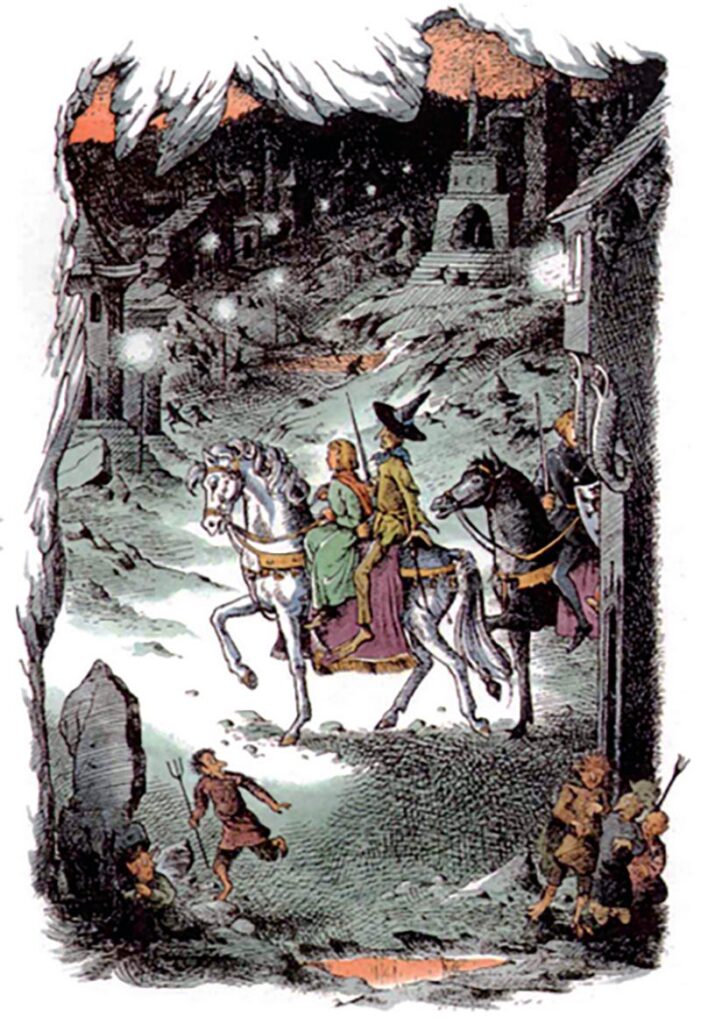
C.S. Lewis understood this worldview all too well. He confronts its self-destructive logic in The Silver Chair, a novel in the The Chronicles of Narnia series. In this story, our protagonists Jill Pole, Eustace Scrubb, and Puddleglum travel to the strange land of Underland, which is a dark underground civilization populated by the miserable looking people called Earthmen. Here, away from the sunny lands of Narnia, the greatest test that our heroes face is not physical danger, but spiritual apostasy. 

A Crisis of Faith

In Underland, Jill, Eustace and Puddleglum free the Narnian Prince Rilian from captivity, thus completing the quest that Aslan sent them on. But before they can escape, the Queen of Underland arrives, the Lady of the Green Kirtle, who is a witch. 

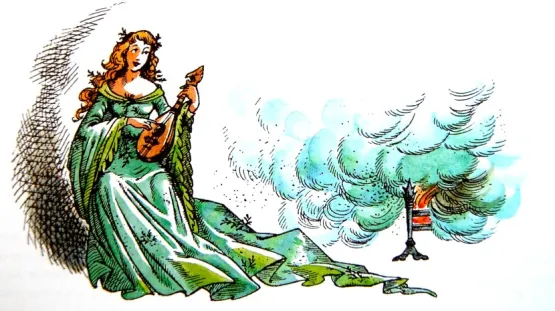
Upon seeing her escaped prisoner, the Witch does not violently attack the heroes. Instead, she throws some magical green powder into the fire, filling the air with a sweet, drowsy smell, which makes it “harder to think.” Then, she starts playing a mandolin-like instrument, which also makes it hard to think. Finally, she begins to question their beliefs about “Narnia” and “the Overworld” and “Aslan”, making our heroes doubt whether or not these things have ever existed. 

The Witch begins by questioning the existence of Narnia. When Puddleglum protests that he knows he has been there once, as he distinctly remembers seeing the sun , the Witch pivots to questioning the existence of the sun. Since they are underground, nobody can point to the sun to verify its existence, and so they have to use analogies to explain it to the Witch. The sun is like the lamp in this room, only far greater and brighter, Prince Rilian says. The Witch laughs at this and says:

“You see? When you try to think out clearly what this sun must be, you cannot tell me. You can only tell me it is like the lamp. Your sun is a dream; and there is nothing in that dream that was not copied from the lamp. The lamp is the real thing; the sun is but a tale, a children’s story.”1

This conclusion is absurd; Jill, Eustace, and Puddleglum have been seeing the sun their entire lives. But in the Underland, in the utter darkness, and under the influence of the magic green powder, and the mandolin, and the Witch’s soft, sorcerous voice, our heroes are eventually convinced to deny the existence of the sun. But it doesn’t end there. Jill, in defiance of the Witch’s narrative, declares that “there’s Aslan”. So then, predictably, the Witch begins to sow doubt about the existence of Aslan and even lions in general. She says: 

“We should do no better with your lion, as you call it, than we did with your sun. You have seen lamps, and so you imagined a bigger and better lamp and called it the sun. You’ve seen cats, and now you want a bigger and better cat, and it’s to be called a lion. Well, ’tis a pretty make-believe…And look how you can put nothing into your make-believe without copying it from the real world, this world of mine, which is the only world. But even you children are too old for such play.”2

The Witch is so condescending, isn’t she? And yet, it’s her arguments that should be laughed at. Obviously there’s a sun! Obviously there are lions! But the Witch’s magic is too powerful, and by this point it seems as though our heroes will completely succumb to her deceit. 

Philosophical Parallels 

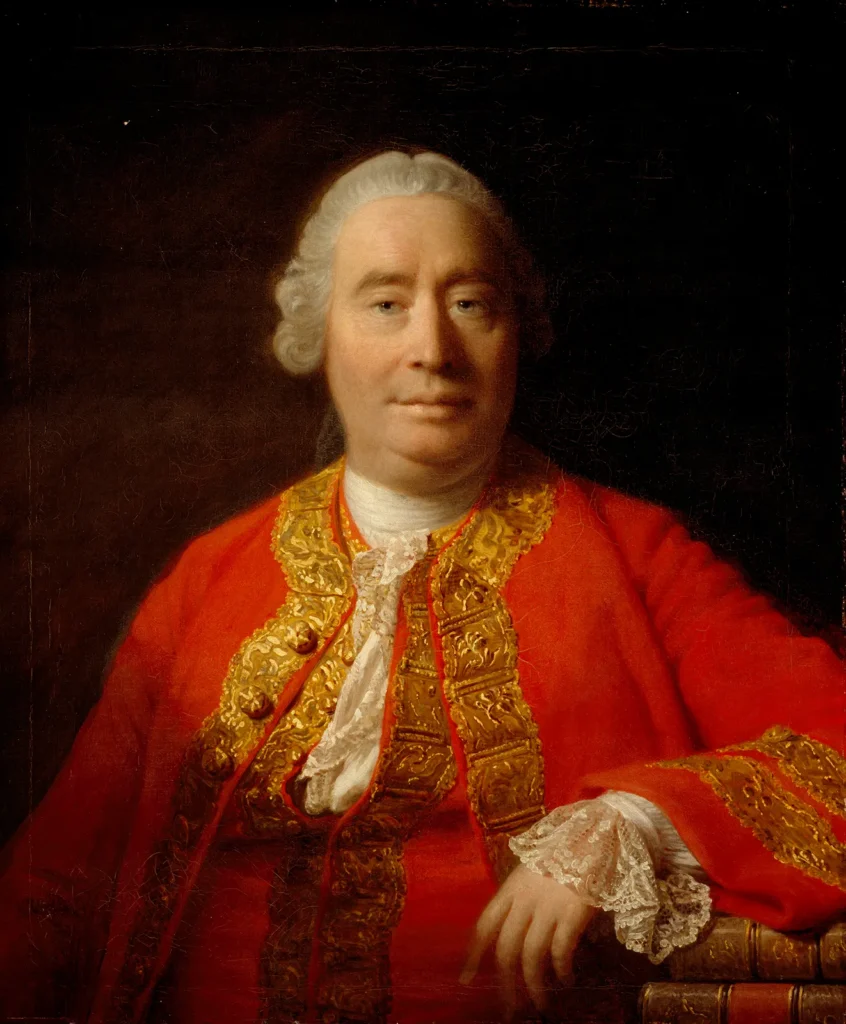
Read some naturalist philosophy, and you’ll start to hear some eerie parallels between their arguments and those of the Witch’s. For example, Lewis was no doubt inspired by the 18th century Scottish philosopher David Hume when he wrote the Underland passages. Hume is well known for his skepticism, and he doubted all sorts of things, from miracles to inductive reasoning to the reality of cause and effect relationships. His skepticism arguably came from his naturalist worldview. 

Hume famously made a distinction between what he called “impressions” and “ideas”. According to C. Stephen Evans, “Impressions then are what we immediately experience, either through the senses or by attending to our own minds.” So an impression would be the sweetness we taste when we bite a pineapple. “Ideas” are copies of impressions. We construct our ideas or concepts based on sensations we have had in the past. I have seen a horse before, as well as an animal horn, and so I combine the two and come up with a unicorn.3

Doesn’t this sound familiar? According to the Witch, the “sun” and “lions” are nothing but ideas, or imaginative constructions of things that have already been experienced, such as lamps and cats. And just as the Witch declared “there is no sun”, Hume’s philosophy led him to make some interesting claims himself. For example, Hume thought that the “self” doesn’t really exist. In other words, you and I don’t really exist. Evans explains, “The self for Hume is really just a ‘bundle of perceptions.’ We are just a stream of psychological events following each other rapidly.”4

It’s common to find this Humean skeptical attitude in naturalist literature. Just take a look at two examples:

First, the psychologist Sigmud Freud famously argued that belief in God was a form of “wish fulfillment”. He writes, “the terrifying impression of helplessness in childhood aroused the need for protection-for protection through love which was provided by the father; and the recognition that this helplessness lasts throughout life made it necessary to cling to the existence of a father, but this time a more powerful one. Thus the benevolent rule of a divine Providence allays our fear of the dangers of life…”.5 So, our “heavenly father” turns out to just be a psychological projection; we take the best traits from our earthly fathers and use them to construct God. Again, here we see echoes of the Witch’s arguments against the sun and lions.

Second, speaking about the existence of the soul, M.H. Sabatés sneers, “‘Immaterial mind’ or ‘soul,’ like ‘élan vital,’ ‘elf,’ or ‘chupacabras,’ are ghostly expressions that come from mistaken frameworks or conceptions and do not refer to anything.”6 Remember how condescending the Witch was? Well, this kind of dismissive attitude towards anything non-physical (like souls and God) can be pretty common among naturalists.

So, once the Witch gets our heroes to admit that there is no sun, no Narnia, no Aslan, what then? If naturalists get us to admit that there is no soul, no miracles, no God, what then?

The Horror of Underland 

Underland is a dark, miserable place populated by miserable people. And no wonder. They have no sun to give them light or warmth, no Narnia to roam freely around, and no Aslan to protect and love them. They are living in a dead wasteland. And if Jill, Eustace, Rilian and Puddleglum were convinced to abandon their most precious beliefs, they would be trapped in this wasteland by choice. They would essentially be comitting philosophical and spiritual suicide, depriving themselves of all that is good, true and beautiful.

And if we deny the existence of our own souls, we deny what makes us special in the world. We are nothing but clumps of flesh bound together by chemical reactions, and there is nothing special about that. If we deny the existence of God and the afterlife, then we exist for no purpose, and our lives are absurd and meaningless. If we follow the naturalist’s gameplan, then we imprison ourselves in Underland, a cold, dark abyss deprived of hope and joy. We commit philosophical and spiritual suicide.

But thankfully, our heroes choose to spare their own lives.

Puddleglum stamps on the fire which the Witch threw the green powder in. This reduces the enchanting smell that the powder caused, and fills the air with the unechanting smell of Puddleglum’s burnt foot. He then declares,

“Suppose we have only dreamed, or made up, all those things—trees and grass and sun and moon and stars and Aslan himself…Then all I can say is that, in that case, the made-up things seem a good deal more important than the real ones. Suppose this black pit of a kingdom of yours is the only world. Well, it strikes me as a pretty poor one…I’m on Aslan’s side even if there isn’t any Aslan to lead it. I’m going to live as like a Narnian as I can even if there isn’t any Narnia.”7

The Witch’s plot is foiled, and after that she decides to attack them physically in the form of a snake. Our heroes defeat her and escape the Underland.

Enchantments or Eternity

After I read this story, I wondered, is there any parallel to the Witch’s sweet smelling powder and sweet sounding mandolin in naturalist philosophy? What, if anything, could be attractive or seductive about the miserable, denuded, nihilistic philosophy of naturalism? What about naturalism enchants us?

Lewis’s thoughts in his book The Weight of Glory may give us a hint. He writes, “We are half-hearted creatures, fooling about with drink and sex and ambition when infinite joy is offered us, like an ignorant child who wants to go on making mud pies in a slum because he cannot imagine what is meant by the offer of a holiday at the sea. We are far too easily pleased.”8

If naturalism is true, and there is no God, and we aren’t special, then we don’t have any special role to play in the world and no special obligations to fulfill. And that means that we can do whatever we please. We can chase all the pleasures of life without worrying about the afterlife. And with this enchanting smell in the air, maybe we can be tempted to buy into naturalism. Maybe we can say, “there is no sun.”

So what will we do? Will we give in to the enchantment and destroy ourselves in Underland? Or will we stamp on the fire and expose naturalism for what it really is, and hold on to the hope of a greater joy to come?

And I want to make it clear that I am not encouraging some sort of strong fideism or religious subjectivism here, or any kind of view which tells us to persist in faith even if our religious beliefs turn out to be false. Ironically, this view is actually an unbiblical one, as Paul says in 1 Corinthians 15:17-19: “And if Christ has not been raised, your faith is futile; you are still in your sins. Then those also who have fallen asleep in Christ are lost. If only for this life we have hope in Christ, we are of all people most to be pitied.” So I disagree with Lewis, speaking through Puddleglum, that “I’m on Aslan’s side even if there isn’t any Aslan to lead it”. If you’re this person, then by the very words of the Apostle Paul himself, you are “most to be pitied”.

But I also think that there is a way to salvage what Puddleglum is saying. We shouldn’t persist in faith if it turns out that our religious beliefs are false. But it may be that the current evidence appears as though it is against Christianity, or theism, and the data and arguments we have seem to favor naturalism. Or maybe things are just 50/50: the evidence can go either way. In this case, I do want to say, as Blaise Pascal argued, that we should hold on to our faith. The eternal joy that Christianity offers is incommensurably superior to the grim Underland of naturalism. Under the shadow of philosophical suicide, we must fight for our lives.

So I say, in Puddleglum fashion, that even a desperate hope for the eternal God is better than any enchantment that the godless forces of this world can conjure up.

  1. C.S. Lewis, The Silver Chair, 178. ↩︎
  2. Ibid, 180. ↩︎
  3. C. Stephen Evans, A History of Western Philosophy, 337-338. ↩︎
  4. Ibid, 350-351. ↩︎
  5. Sigmund Freud, The Future of an Illusion, 30. ↩︎
  6. M.H. Sabatés, “Reductionism in the Philosophy of Mind”, Encyclopedia of Philosophy, Retrieved from http://www.encyclopedia.com/humanities/encyclopedias-almanacs-transcripts-and-maps/reductionism-philosophy-mind. ↩︎
  7. Lewis, The Silver Chair, 182. ↩︎
  8. C.S. Lewis, The Weight of Glory. ↩︎
Comments Off on The Silver Chair: Naturalism and Self Destruction

Crime and Punishment: “Love Thy Enemy”

Dostoyevsky’s magnificent novel Crime and Punishment ponders how we can balance love and justice when faced with heinous evil.

“Love your enemies and pray for those who persecute you”. It sounds so pious, so noble, so beautiful, doesn’t it? It’s the perfect verse for sermons and devotionals, and it’s such an easy verse to say. But it’s also an easy verse to vanish in our hearts and minds when we see the next national news headline, or when we scroll through the comments of a politically charged post, or when we drive on the highway and we have to slam on our breaks for that person who seems to be actively seeking to kill people. 

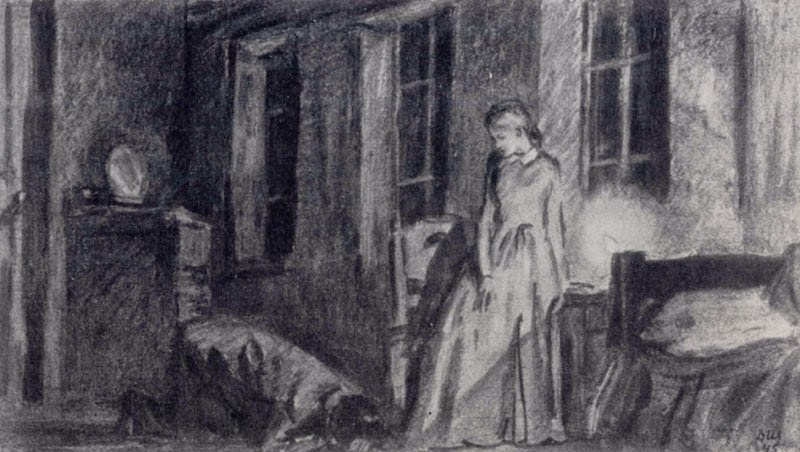
And what about if someone took an axe and murdered your innocent friend for no good reason? Could you love them then? Would you feel nothing but moral outrage towards this murderer, or would you be able to make room for compassion and mercy? How can you balance justice and love? These are all important questions that Fyodor Dostoyevsky explores in his moving novel Crime and Punishment, particularly through the characters of Raskolnikov (a young, poor, former university student, and the novel’s protagonist), who is the murderer, and Sonya (a prostitute Raskolnikov befriends), who is the bereaved.

Double Murder

Raskolnikov originally plans to murder only one person: an old, rich pawnbroker named Alyona Ivanovna. He plans to kill and rob her, and he tries to justify this action to himself. Alyona is not a very nice woman, and besides, her money could be used for good. Motivated (at least superficially) by this logic, Raskolnikov executes his plan.  

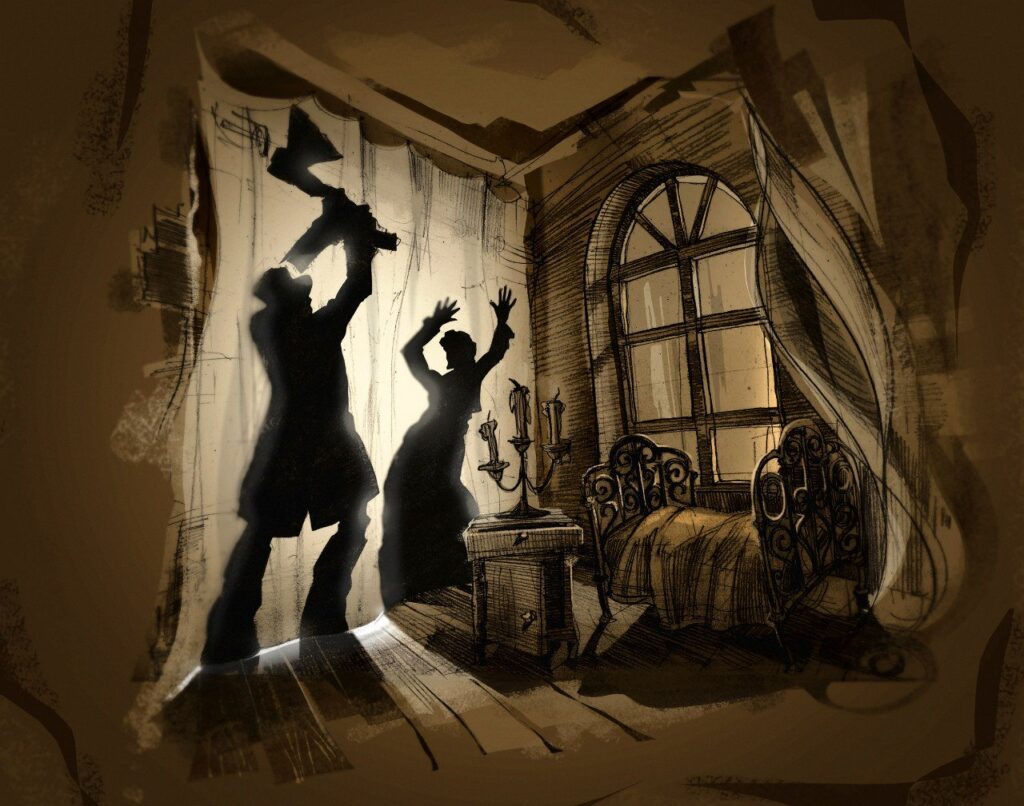
Raskolnikov thinks that Alyona will be alone when he carries out the murder. But his plan goes horribly wrong when Lizaveta, Alyona’s younger half-sister, steps into the room after Raskolnikov has just murdered Alyona. Raskolnikov rushes at Lizaveta with an axe, and her reaction is heartbreaking:

“And this wretched Lizaveta was so simple, so downtrodden, and so permanently frightened that she did not even raise a hand to protect her face, though it would have been the most necessary and natural gesture at that moment, because the axe was raised directly over her face”.1

Now it turns out that Sonya was friends with Lizaveta, and they used to read the Bible and talk together. So after Raskolnikov confesses to Sonya that he murdered Alyona and Lizaveta, he does a whole song and dance to try to justify his actions to her. He tries to compare himself to “Napoleon”, an “extraordinary man”, who has to get his hands dirty in order to get his career going for the greater good of mankind. He then tries to say that he planned on robbing Alyona in order to support himself as a university student so he could help his family. But eventually he reveals the horrible truth:

“I wanted to kill without casuistry, Sonya, to kill for myself, for myself alone! I didn’t want to lie about it even to myself! It was not to help my mother that I killed-nonsense! I did not kill so that, having obtained means and power, I could become a benefactor of mankind. Nonsense! I simply killed-killed for myself, for myself alone-and whether I would later become anyone’s benefactor, or would spend my life like a spider, catching everyone in my web and sucking the life-sap out of everyone, should at that moment have made no difference to me!”2

So Raskolnikov is a moral monster who planned to kill for purely selfish reasons, and poor Lizaveta was caught in the crossfires of his wicked scheme. Now even though Raskolnikov had done something incredibly kind to her before this, giving her all his money so she could support her family, it was perfectly understandable for Sonya to despise him at this moment. Past charity does not excuse a malicious double murder. She had every reason to call the police and let justice be done and leave the matter at that. But her reaction is very interesting and morally nuanced. 

Toxic Empathy or Sinful Wrath?

What does it mean to “love thy enemies”? What exactly does Christian love and empathy entail? It’s easy to manipulate verses like this one, and so just as we roll our eyes when someone misuses the verse “Judge not…”, we might also be tempted to have a similar reaction when someone says “love thy enemies”.

We might insist that Christ’s teachings about love are all well and fine, but they do not mean we abandon justice, which God has also commanded us to pursue (Micah 6:8). Justice demands law and order, and the punishment of evil. And some other Christian may push back on that, and insist that God’s commands about justice are all well and fine, but we must act lovingly first. Love demands compassion and mercy towards evildoers and criminals. 

And of course, when we have a tension like this one, it is easy to abandon all nuance and slip into extremes. So Christian X may say, “sure, Raskolnikov committed ‘murder’, but he’s had a tough life, and he’s a hypochondriac, and he’s done some nice things before, and besides, Alyona wasn’t so innocent herself, so who am I to judge…”. And Christian Y may say, “Raskolnikov is the spawn of Satan, who butchered two innocent women for selfish reasons, and he deserves a slow, agonizing death, and I would do it myself if I could …”. 

What is the temptation of our day? Is it to let criminals get away with murder in the name of love and empathy? Or is it to strip these wrongdoers of all humanity and deny them any sort of compassion in the spirit of moral wrath? Which extreme will we choose? Or can we balance justice and love?

Sonya’s Saintliness

Sonya does. When Raskolnikov asks her what he should do now, this is what she says:

“Go now, this minute, stand in the crossroads, bow down, and first kiss the earth you’ve defiled, then bow to the whole world, on all four sides, and say aloud to everyone: ‘I have killed!’ Then God will send you life again.”3

Raskolnikov understands what this sort of public confession entails. It is the justice he has been dreading the whole novel. It means he will go to prison. He says:

“So it’s hard labor, is it, Sonya? I must go and denounce myself?” 

And she responds:

“Accept suffering and redeem yourself by it, that’s what you must do.”4

So Sonya does not throw justice out in the name of love. She demands justice for the murders of Alyona and Lizaveta. But she also does not throw out love in the name of wrath. Instead, she offers Raskolnikov her life. Sonya wants both Raskolnikov and herself to wear cross necklaces as they both go to suffer “hard labor”:

“Here, take this cypress one. I have another, a brass one, Lizaveta’s. Lizaveta and I exchanged crosses; she gave me her cross, and I gave her my little icon. I’ll wear Lizaveta’s now, and you can have this one. Take it … it’s mine! It’s mine!” she insisted. “We’ll go to suffer together, and we’ll bear the cross together!”5

And she does. She follows him to the police station where he confesses his crime. And after he is sentenced to a prison camp in Siberia, she follows him there, starts a correspondence with his family so he can receive news from them, and frequently visits him in the prison. And even after all of this, he mistreats her and acts rudely to her.  But she persists in her compassion, and eventually Raskolnikov repents, becomes a changed man, and comes to love her. 

Behold the Lamb of God

When we witness injustice, whether done to us or others, it is easy to rage, and treat the evildoer the same way Raskolnikov’s fellow prisoners treat him: 

“You’re godless! You don’t believe in God!” they shouted. “You ought to be killed!”6

But it’s infinitely more difficult to treat the evildoer with the Christlike love and mercy that Sonya exemplifies. Now obviously, we are not obligated to follow our enemies all the way to labor camps like Sonya does. But we are commanded to love them, and pray for them, and forgive them seventy times seven. As Sonya shows, this love need not come at the expense of the just condemnation and punishment of evil. But it does come at the expense of our desire to hate those who have wronged us.

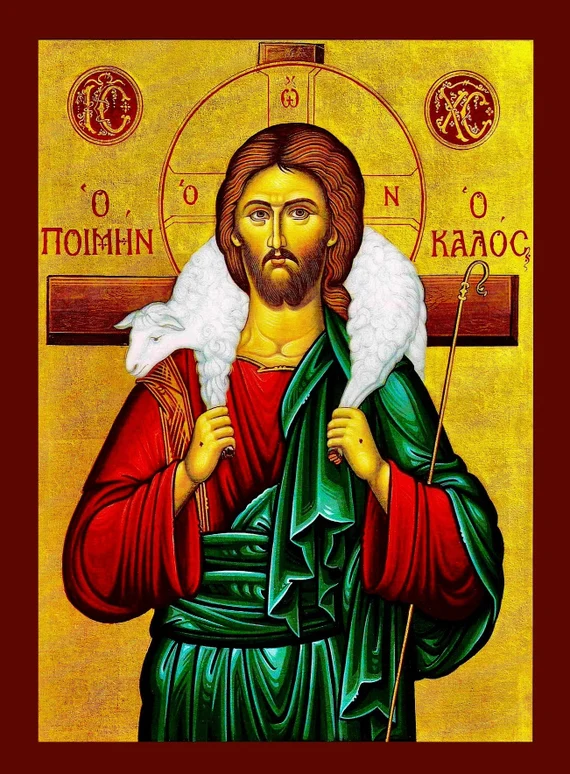
It is interesting that the prisoners, who are murderers just like Raskolnikov, declare that he “ought to be killed.” In God’s eyes, before we accepted Christ, we were all murderers, all sinners who rebelled against God and who had no right to condemn anyone (see Matthew 18:21-35, the parable of the unmerciful servant, for Jesus’s teaching on this). But despite our sin and hypocrisy, it is Christ who bears our cross and suffers hard labor in our place and resurrects us. It is this Christian love that Dostoyevsky beautifully illustrates in his novel, and it is (one reason) why I personally believe that Crime and Punishment is one of the greatest Christian novels of all time. 

  1. Fyodor Dostoyevsky, Crime and Punishment, 83-84. ↩︎
  2. Ibid, 441. ↩︎
  3. Ibid, 442. ↩︎
  4. Ibid, 442. ↩︎
  5. Ibid, 444. ↩︎
  6. Ibid, 575. ↩︎

1 Comment on Crime and Punishment: “Love Thy Enemy”

Superman (2025): Who Do We Want Superman to Be?

Christians should evaluate what kinds of characters we want in media after the loss of yet another Christ figure in Superman (2025).

In the past two articles in this three part series, I’ve argued that in past Superman movies, Superman was written as a Christ figure, or someone who emulates an important aspect or aspects of Christ’s character, mission or identity. For the newest movie, Superman (2025), I’ve made the case that this Superman is not a Christ figure, and is instead more of a humanist or existentialist exemplar.

But, so what? So what if this Superman is more humanist than messianic? For those that enjoyed the movie (and I certainly did too), this whole article might seem like another pointless addition to the never ending culture war. Superman (2025) is supposed to be a fun summer movie that you enjoy for the visuals and don’t think too deeply about. Right?

The truth is, very few (if any) instances of art and media are truly neutral, philosophically speaking. The significant changes to Superman’s origins and character were clearly deliberate. And if deliberate, then they were likely motivated by a philosophical stance or agenda. Our art, including “fun summer movies”, shapes us and forms us as people. The messages in our movies, shows and literature inform and influence our worldviews. So as Christians, we need to be constantly mindful and vigilant of all the implicit messages that any story, even the fun and silly ones, is trying to communicate. 

Christian Existentialism

So what do we do with this new Superman? Must Superman be a Christ figure to be acceptable? First, it must be said that existentialism isn’t an inherently bad philosophy. There were some Christian existentialists, such as Søren Kierkegaard, Blaise Pascal and Fyodor Dostoevsky. They generally upheld the importance of personal choice. Pascal, for example, is famous for “Pascal’s Wager”, which encourages people to believe in God even in the absence of evidence, as rejecting God could have dire consequences. 

And some existentialist views do correspond to Christian teachings. Existentialism teaches that your choices make you what you are. We can find a similar theme in 2 Peter 1:3-11. Here, Peter tells us that though God has “given us everything we need for a godly life”, we are to “make every effort” to complement our faith with various spiritual virtues. These virtues “will keep you from being ineffective and unproductive in your knowledge of our Lord Jesus Christ”. Whoever does not have them is “nearsighted and blind”. So in some sense, we are responsible for the formation of our own character, and it is up to us (though of course with the help of God’s grace) to make the right choices in order to be a virtuous person. 

This means that there are many positive lessons to learn from Superman (2025). Just like Clark, none of us have a choice when it comes to the parents we have, or the situation we are born into. But we can make the right choices despite our origins, as Clark did. No matter how ungodly or godly our household was during our childhoods, for example, it is up to each of us individually to accept God’s free gift of salvation and choose to obey Him. 

Sisyphus or Savior?

On the other hand, Superman has long been a prominent Christ figure (at least in the movies). One less Christ figure in media means even less Christian influence in contemporary entertainment. And Superman (2025) is not alone. Shows like Invincible and The Boys turn “superman” figures into ruthless conquerors or morally bankrupt, egocentric frauds. These shows teach that you can’t trust the Christ figures. Rather, people must abandon hope in salvation from above and embrace the existentialist idea that you can only save yourself. 

Maybe we as Christians don’t want every single character in our media to be just another flawed human being. Maybe we do want Christ figures in our films, shows and literature. At least, we might sometimes want stronger, more explicit Christian themes in our entertainment rather than just generic ethical messages that can apply to any worldview. The less Christ figures we have in our media, the less interested our culture might become in Christ. The more the gospel gets squeezed out of our stories, the more our entertainment becomes the salt that has lost its taste, or the light which is hidden under a basket. 

Maybe Superman doesn’t have to be messianic for us to enjoy him. But surely we want some character out there to remind us of Christ. 

Comments Off on Superman (2025): Who Do We Want Superman to Be?

Superman (2025): Who is Superman Now?

Superman (2025) subverts Superman’s Christian origins and turns the superhero into an existentialist figure rather than a Christ figure.

In the last article, we saw that Christian theology heavily influenced Superman’s origin story and character in past movies. Superman’s benevolent parents send him to guide humanity and be a “light” to them. 

Superman (2025) turns this Christian message on its head. At first, it seems as though Clark’s Kryptonian parents are exactly like the Jor-El and Lara (Superman’s mother) of past portrayals. In the Fortress of Solitude, Superman’s Arctic base, Clark listens to a message from his parents. This message definitely seems messianic. Lara explains, “we have searched the universe for a home where you can do the most good and live out Krypton’s truth.” Jor-El then says, “that place is Earth”. Unfortunately, the message is damaged and only a portion of it can be played. 

So far, so good, right? Well, it turns out that Superman’s parents didn’t really have the best intentions in mind for Earth. Superman’s nemesis Lex Luthor later exposes the missing portion of Jor-El and Lara’s message, revealing a sinister, imperialist plot. 

Jor-El tells his son, “The people there (Earth) are simple and profoundly confused, weak of mind and spirit and body.” So Jor-El commands Superman to “lord over the planet as the last son of Krypton” and to “rule without mercy”. Lara twists the knife with this spectacular advice: “Dispatch of anyone unable or unwilling to serve you, Kal-El. Take as many wives as you can so your genes and Krypton’s might and legacy will live on in this new frontier.”  

Message Denied

Obviously, Clark and the denizens of Earth don’t receive this message so well. So, a distraught Clark turns to his adoptive human father, Jonathan Kent, for advice. Jonathan, in a tenderhearted tone that reflects his down-to-earth wisdom, tells his son that “parents aren’t for telling their children who they’re supposed to be”. 

We can already see how Superman (2025) changes Clark’s Christian origins somewhat radically. Instead of godlike, benevolent parental figures, Clark’s Kryptonian parents are chauvinistic and authoritarian. Clark’s messianic mission is nothing more than an imperialist plot. And we learn that not only should Clark’s biological parents be rejected as moral guides, but actually no parent should tell their children who they’re supposed to be (including divine parents?). It’s not hard to see how these are all significant departures from the Superman of previous films. 

Superman turns more humanist as Jonathan Kent reveals more of his philosophy of identity. Jonathan says, “Your choices, Clark. Your actions. That’s what makes you who you are.”

Sartre’s Superman

Students of existentialism will recognize this message very quickly. It is the classic existentialist motto, “existence precedes essence”. Existentialists such as Jean-Paul Sartre taught that the fact that you exist (existence) comes before facts about what you are (essence). In other words, you start off in the world as an existing thing, but we have no idea what kind of thing or person you are. Why? Because it is your own choices that define what or who you are. Until you start making your own choices and defining who you are for yourself, you are a blank slate, and your essence is indeterminate. 

In his book Existentialism is a Humanism, Sartre explains his philosophy in detail. He writes, “What do we mean by saying that existence precedes essence? (…) If man as the existentialist sees him is not definable, it is because to begin with he is nothing. He will not be anything until later, and then he will be what he makes of himself”.

This view sharply diverges from traditional philosophy, which holds that essence precedes existence. For example, there is such a thing as a universal “human nature” which human beings participate in or take on when they are conceived. But Sartre writes, “there is no human nature, because there is no God to have a conception of it”. Beyond rejecting traditional philosophy, this statement illuminates the atheistic element of Sartre’s existentialism. It also closely relates to Superman’s origins in Superman (2025). 

Kryptonian Enlightenment

As we saw, in stark contrast to the previous Superman films, Superman does not have benevolent, quasi-divine parents to define his identity and mission for him. His parents, like all forms of “organized religion”, turn out to be moral frauds, and Clark must cast their teachings aside. Since he has no guide (like Sartre has no God), Clark must figure out the meaning of life for himself.

As Clark himself declares to his nemesis Lex Luthor at the climax of the movie, “I’m as human as anyone. I love, I get scared. I wake up every morning, and despite not knowing what to do, I put one foot in front of the other, and I try to make the best choices I can. I screw up all the time. But that is being human. And that’s my greatest strength.” 

Maybe nobody created Superman’s new origin story with an anti-religion or anti-theist agenda. But it’s still telling that Superman (2025) not only replaces Superman’s Christian origins and mission, but conspicuously and intentionally subverts them. 

Comments Off on Superman (2025): Who is Superman Now?

Type on the field below and hit Enter/Return to search