
Project Hail Mary inspires questions about the cinematography of space, the existence of aliens, and the importance of sacrifice.
Project Hail Mary, a movie already receiving Oscar buzz for best actor, best picture, best visual effects, and many more, dropped into theaters this past Friday achieving a weekend box office of $140 million globally and $80 million domestically.1 The movie tells the story of Ryland Grace (Ryan Gosling), a reluctant but brilliant and underappreciated science teacher, who is recruited by NASA to fix the catastrophe of the sun dying due to a bacteria called Astrophage that is eating our sun. It turns out that Astrophage is not only eating the Milky Way’s star, but other stars as well. So, in desperate need to save earth, Grace is sent to another galaxy’s star – Tau Ceti – where he meets an unlikely friend named Rocky.
The movie is an achievement in all areas, deserves Oscar nominations, and is worth the money to go see in theaters! The movie also makes me want to dive into Andy Weir’s novel which the movie is based off of, and has inspired three main thoughts regarding the cinematography of space, the existence of aliens, and lastly, the thematic importance of sacrifice throughout the film.
The Heavens Declare the Glory of God
The film begins with a phenomenal portrait of space, or of what one should call “the heavens.” The visuals, screenwriting, and cinematography do not hate space! While many space movies portray space as a dark nothingness that wants to kill us, this movie is more optimistic and portrays visuals that are hauntingly reverent. Today, our culture thinks of space much like the writers of the Ancient Near East thought of water as primeval dark chaos, something deadly and itself lifeless, and something that destroys our order.2 While some may still fear water, our culture at large does not fear it. However, we do fear space.
Grace, when he wakes up on the ship, also fears it; although, this may be due to him being alone without his past memories, not necessarily because he fears space, as later on in the movie, he is comfortable and maneuvers space as if it is his home or a regular street on earth. The cinematography captures the life-giving nature of space when it pans forward to reveal a heavenly painting of galaxies and stars set before Grace’s eyes:
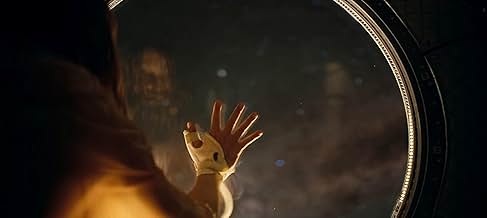
Space should not be thought of as a deadly dark void; rather, it should be viewed as something that has a voice, a life-giving voice that makes us aware of the beautiful artist that painted it! We ought to return to gazing at the stars and feeling the immense grandeur of the heavens that our home floats in. Oddly enough, this was the intention of the directors, Phil Lord and Christopher Miller:
“One thing about this story that’s unique is that a lot of films are about someone who feels at home on Earth, wakes up in space, and they feel lonely. This is a movie about someone who feels lonely on Earth. They go to space and find a friend. We wanted space to be, in a funny way, inviting. The old vacuum of space is actually warm and inviting. You’re closer to heaven. The way the film is textured visually, we wanted it to feel more homey.”3
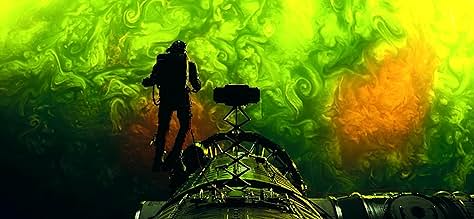
The directing, acting, and dazzling cinematography achieve this invitation to ponder space not as lonely but as a warm home that “brings us closer to heaven.” I argue that it doesn’t just bring us closer to heaven, it is the heavens! C.S. Lewis, in Out of the Silent Planet, uses the character Ransom to explore the misnaming of space. Ransom, just like Grace, wakes up in a spaceship and experiences the vastness of the heavens. Lewis writes:
“He could not call it ‘dead’; he felt life pouring into him from it every moment. How indeed should it be otherwise, since out this ocean the worlds and all their life had come? He had thought it barren: he saw now that it was the womb of worlds, whose blazing and innumerable offspring looked down nightly even upon the earth with so many eyes – and here, with how many more! No: space was the wrong name. Older thinkers had been wiser when they named it simply the heavens – the heavens which declared the glory.”4
Lewis is right. When I look at photos from NASA’s Hubble Telescope, or go stargazing, or when I watch interstellar movies, I do not think of space as “space.” Simple “space” does not cause reverence within me nor does it cause me to feel the presence of God. Grace in the movie asks Eva Stratt, the leader of Project Hail Mary, if she believes in God. She replies, “it beats the alternative.” While that sentiment is most definitely true, a more confident reply could be given. The heavens scream from the top of their lungs that God exists! The only question is if our ears are attuned enough, and not blocked, so that we can hear the voice of the heavens.
While I do feel the presence of God while gazing at the stars, I also do wonder if there is more than just us human beings.
Are There and Should There be Aliens?
Our culture is fascinated with the idea of extraterrestrial life, especially extraterrestrial intelligent life (ETI). From NASA and SpaceX to countless movies and novels to academic and unhinged podcasts, we all ponder if we are alone in this universe. Around 65% of American adults think life exists outside of our planet.5 Historically, when we thought of Aliens, we always connected malicious intent and danger with them; however, Project Hail Mary reverses that! The trailers make it known that Grace forms a deep friendship with Rocky and while Project Hail Mary is not the only story to portray Aliens as loving and safe, it is one of the only ones that has stirred this question in my mind: if there does exist ETI, are they sinful? This question does presuppose some metaphysical conditions of our world, namely the fall and that our human nature is inclined to sin. It also engages the wider discussion of whether or not theism, and the Christian story in particular, is compatible with ETI. Interestingly, those who are religious are less likely to believe in ETI.6 However, religious folk need not worry that ETI is incompatible with their faith.
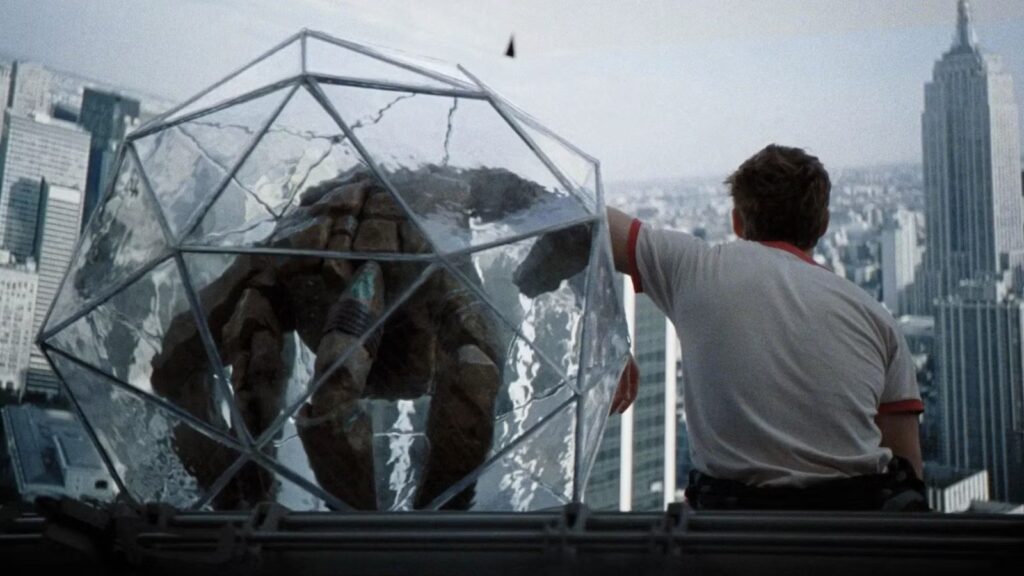
Historically, Christians have not seen other life forms as contrary to the faith. During the medieval church, there existed the medieval dictum “bonum est diffusivum sui” (roughly “goodness is self-diffusive”), which argued that God’s goodness implies that He created an infinite number of worlds with an infinite number of creatures so that His goodness could be shared. Even today, massively influential figures like Billy Graham and Pope Francis believe in the possible existence of aliens.7 Once one allows for the existence ETI, fun theological questions arise: to what extent did the fall of both Satan and the fall of humanity affect the universe; if there are fallen alien creatures, does Christ save them in the same manner He saves us; if so, could Christ take on multiple incarnations (interestingly, giants of the faith like Augustine, Aquinas, and Bonaventure thought yes);8 what kind of natures would these creatures have; could what we mistake as aliens be us interacting with the spiritual realm; would they have their own scripture?; and what other creations, like what unimagined, humanly impossible colors, exist?
Answering these questions would take essay upon essay so I leave them for you to ponder; however, the answer to the question that arose in my mind while watching Project Hail Mary is no; I currently see no reason why ETI would have to necessarily be sinful.
WARNING: SPOILERS AHEAD!
Before watching Project Hail Mary I never thought that I would care so much about a faceless rock creature but, as a good movie does, I slowly began to find this character extremely endearing. Rocky does not give off a scent of sin. He first seeks out Grace even though he does not know if Grace is a threat or not, Rocky is deeply saddened by the death of his fellow crew that were on his ship, lives on what seems to be a peaceful, sin-free planet, and he ends up displaying an incredible act of love for Grace. There already does exist unfallen creatures in this fallen world (e.g. Archangels Michael and Gabriel). C.S. Lewis explored in Out of the Silent Planet the existence of unfallen creatures and I see no theological, historical, practical, or philosophical reasons why such creatures could not exist. And if such creatures do exist, then they could display great acts of love such as self-sacrifice.
Sacrifice
WARNING: SPOILERS AHEAD!
The movie is centered around friendship and this friendship builds into a deeply moving climax. Due to a fuel leak that leads to Astrophage causing the ship to spiral into chaos, Grace is knocked out by the chaos and is left for dead while Rocky is still conscience. However, Rocky cannot escape his bubble without risking death due his physical nature being entirely made up of metal with oxides. If he leaves his bubble, he will essentially catch fire due to the oxygen. Rocky, fully knowing this, risks his life to save Grace.
Later on, after recovering and heading their separate ways, Grace finds out that the Taumoeba (the predator of the Astrophage) is able to escape Rocky’s ship which would leave Rocky and his planet doomed. Grace, who was forced into this mission and did not want to sacrifice himself for his own human race, chooses to sacrifice himself and go back to save Rocky and his people. This pulls at one’s heart, completes a great character arc for Grace, and demonstrates the altruistic narratable desire that all humans have… to be told a story about sacrifice! However, there is one glaring element that is missed in the story.
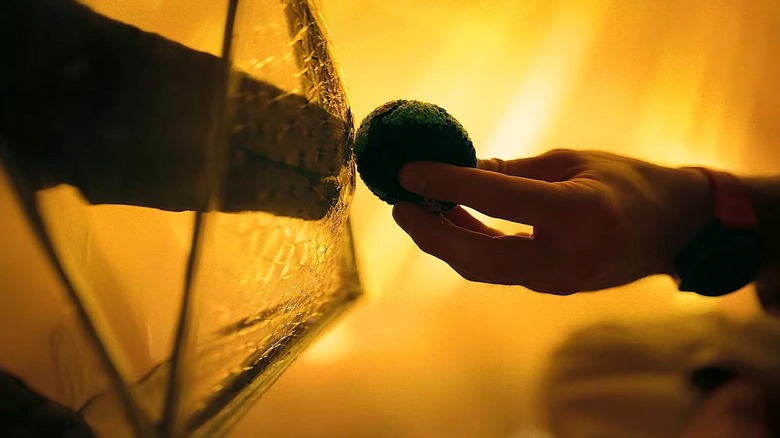
The Sacrifice of both Rocky and Grace are not of the highest sacrificial order. Grace has amnesia for the whole movie, but near the end we, alongside Grace, learn that he was cowardly and selfish as he could not muster any courage to sacrifice himself for the betterment of his planet. In a flashback scene, Grace speaks with one of the astronauts that is going on the mission and tells him that that he admires the gene that makes him brave. The astronaut responds, “It’s not a gene, you just have to have someone to be brave for.” The bravery and love that Rocky and Grace have is the love of friends, something admirable and beautiful, but there is a deeper love. The Apostle Paul writes:
Very rarely will anyone die for a righteous person, though for a good person someone might possibly dare to die. But God demonstrates his own love for us in this: While we were still sinners, Christ died for us. Since we have now been justified by his blood, how much more shall we be saved from God’s wrath through him! For if, while we were God’s enemies, we were reconciled to him through the death of his Son, how much more, having been reconciled, shall we be saved through his life! (Romans 5:7-10).
We love because He first loved us, and His love is unconditional, a love that is foolish to our human intuition because it dies for it’s enemies. Neither Rocky nor Grace die for their enemies, Grace could not even die for his acquaintances. The love of God is unique and radical. It is something we all desire, to be loved even though we ourselves are often unlovely. This is the Gospel – that we are reconciled to God through Himself and for Himself so that we can learn to be like Him and share such unconditional love with the world. We all have a human itch for this love and while Project Hail Mary does not portray love for enemies, it does satisfy this itch of sacrificial love and is why the movie is phenomenal as all great movies reveal and copy the meta-truths and meta-narrative that we live in.
- Rubin, Rebecca. “Box Office: Ryan Gosling’s ‘project Hail Mary’ Scores Biggest Debut of Year with $80.5 Million, Sets Amazon MGM Record.” Variety, March 22, 2026. https://variety.com/2026/film/box-office/project-hail-mary-box-office-biggest-debut-2026-amazon-mgm-record-1236696247/. ↩︎
- Thanks to my friend Michael Hamilton for this connection to Ancient Near Eastern Literature. ↩︎
- Thomas, Lou. “Phil Lord and Chris Miller on Project Hail Mary: ‘We Wanted the Movie to Feel like You Were in the Guts of a Machine.’” BFI, March 13, 2026. https://www.bfi.org.uk/interviews/phil-lord-chris-miller-project-hail-mary. ↩︎
- C. S. Lewis, Out of the Silent Planet (New York: Scribner, 2003), 34. ↩︎
- Kennedy, Courtney, and Arnold Lau. “Most Americans Believe Life on Other Planets Exists.” Pew Research Center, June 30, 2021. https://www.pewresearch.org/short-reads/2021/06/30/most-americans-believe-in-intelligent-life-beyond-earth-few-see-ufos-as-a-major-national-security-threat/. ↩︎
- Alper, Becka A., and Joshua Alvarado. “Religious Americans Less Likely to Believe Intelligent Life Exists beyond Earth.” Pew Research Center, July 28, 2021. https://www.pewresearch.org/short-reads/2021/07/28/religious-americans-less-likely-to-believe-intelligent-life-exists-on-other-planets/. ↩︎
- C. A. McIntosh and Tyler Dalton McNabb, “Houston, Do We Have a Problem? Extraterrestrial Intelligent Life and Christian Belief,” Philosophia Christi 23(1), 2021, 113-114. ↩︎
- Ibid., 109. ↩︎
No Comments on Project Hail Mary