Batman V Superman explores the rejection and willful death of the Godman who became incarnate to redeem those who were lost.
Previously, in part one of this article series, we introduced the argument that the message of Batman V Superman was missed by most of the general audience due to theological apathy and biblical illiteracy. We then dove into the problem of evil, how the foundation for morality has been stripped away, and how Batman is a Nietzsche inspired Übermensch and Killer of God. We now turn Batman’s redemption in Superman.
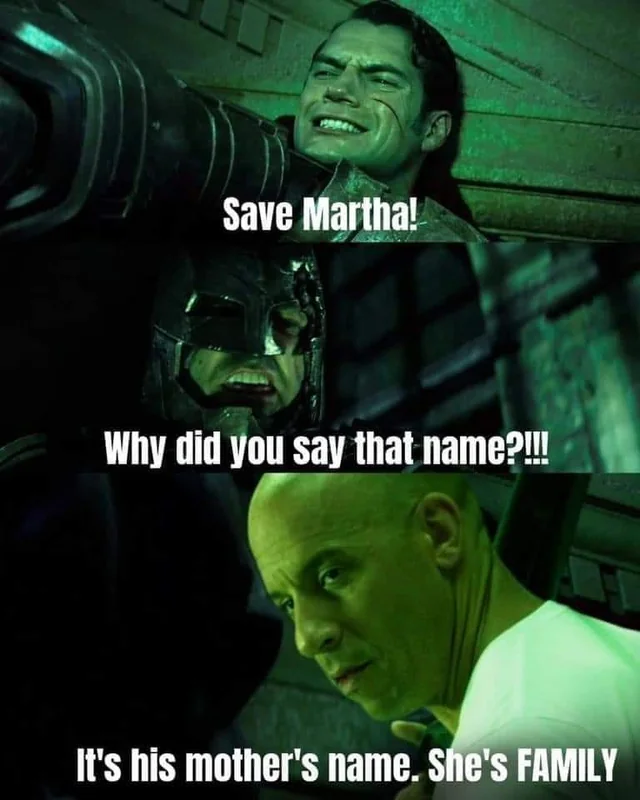
WHY DID YOU SAY THAT NAME!
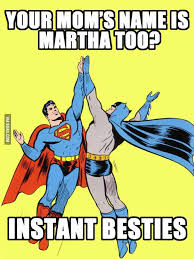
While we all made fun of the infamous Martha moment in Batman V Superman, and while it can come off as cheesy, I do think we missed what Zack Snyder was trying to convey.
Batman hates Superman for not being a man, for being deistic, for not being able to relate or to care for humankind. Batman, while fighting Superman, states, “You’re not brave… men are brave. You say that you want to help people, but you can’t feel their pain… their mortality… It’s time you learn what it means to be a man.” At the end of the fight, when Batman is about to kill Superman, he says, “You were never a god, you were never even a man.”
What Bruce Wayne misses is the fact that Superman is human, that he has emptied himself to become a servant, he has wept, he is a man who knows sorrow well, he can sympathize with our weaknesses, he has felt the pain that the Problem of Evil brings. He is not a deistic god who cares not about his people. Rather He is God in the flesh; he is a God who has a mother. It is at this moment in which Batman’s heart changes. Bruce sees Clark beg to save his mom, Martha. Zack Snyder states:
“The Martha moment… is Bruce’s opportunity to reconnect with his own humanity and the humanity of Superman. Batman doesn’t end the fight because their mothers have the same name, but because he recognizes Superman as someone with a mother, and thus a human, despite his alien origins. The battle against Superman is ultimately Bruce’s realization that he can be better and reconnect with humanity again. It’s not a redemption, or a full change, as he does kill mercenaries at the warehouse in the following scene, but it is a start.”1
Batman realizes that Superman shares his humanity; it is the realization of the Incarnation that changes Batman. He realizes that God is not far from our suffering, but is with us in it! Now while Batman still kills, he does eventually return home to his no-kill rule in the Justice League. He finds his true humanity again, a humanity that is transformed and likened to Superman or to Christ.
Superman and the Death of Christ
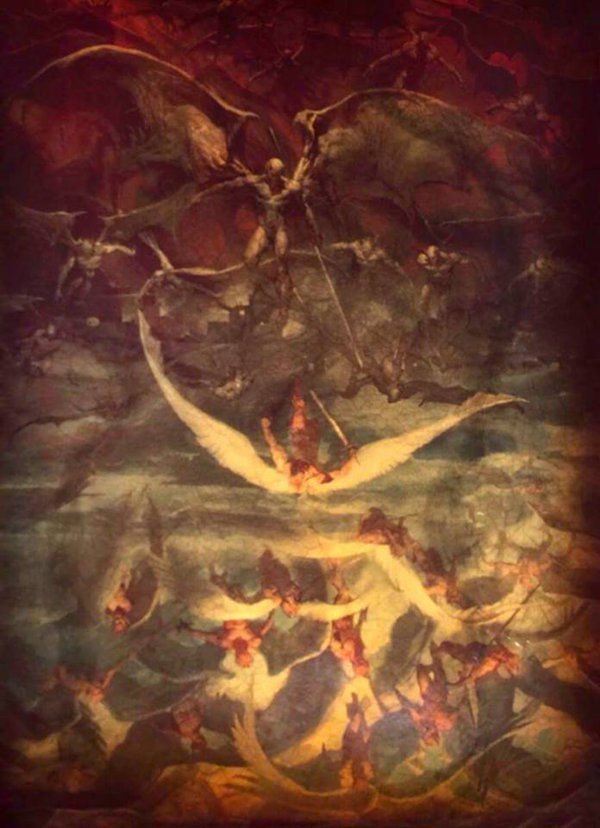
The religious imagery and comparison of Superman to Christ is obvious throughout both Man of Steel (2013) and Batman V Superman. One only has to look at the images below to understand what Zack Snyder is doing:
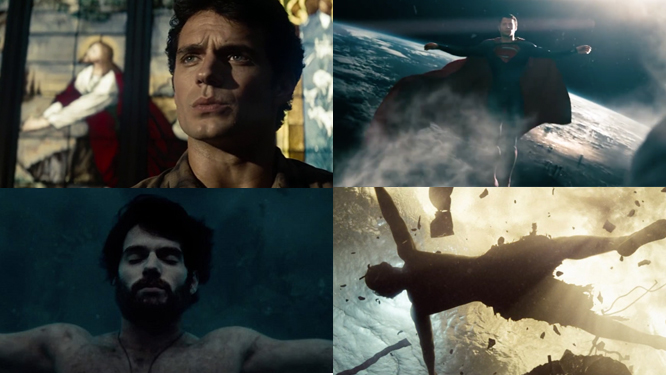
The original creators of Superman, Jerry Siegel and Joe Shuster, created Superman as Moses-figure. Superman has since been seen as both a Moses and a Christ-figure. In Hebrew, Kal-El, Superman’s Kryptonian name, means “Voice of God”. In Man of Steel, he is thirty-three years of age when he begins making public his Superhero activities. Another powerful image is when Jor-El (Superman’s Kryptonian father) says to Superman, “You can save all of them.” Superman then extends his arms from his sides in a crucifix before going to save humanity from destruction. The Christ imagery is blunt and obvious.
Another comparison to Christ is the fact that Superman chooses to save humanity. His mother, Martha Kent, states, “Be their hero, Clark. Be their angel, be their monument, be anything they need you to be… or be none of it. You don’t owe this world a thing. You never did.” Superman could easily regret ever coming to earth and forgo the saving of humanity. God could regret that he ever made mankind and flood the earth once again, but he does not! Rather, he willingly submits to suffering:
Do you think I cannot call on my Father, and he will at once put more than twelve legions of angels at my disposal? – Matthew 26:53
No one takes it from me, but I lay it down of my own accord. – John 10:18
But when the goodness and loving kindness of God our Savior appeared, he saved us, not because of works done by us in righteousness, but according to his own mercy. – 1 Timothy 3:4
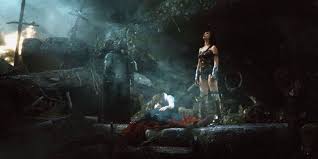
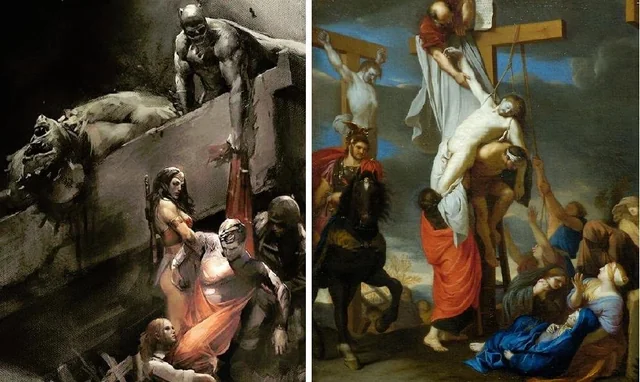
Superman willingly chooses to save humankind from Doomsday even though he knows that it will cost him his life. Zack Snyder and the concept artists position religious imagery to evoke Superman as the Christ:
Lastly, one of the most striking symbols is the kryptonite spear. A fan asked Zack Snyder on Twitter why Batman, with all the technology he has at his disposal, chose a spear to be the weapon that kills Superman. Zack Snyder responded:
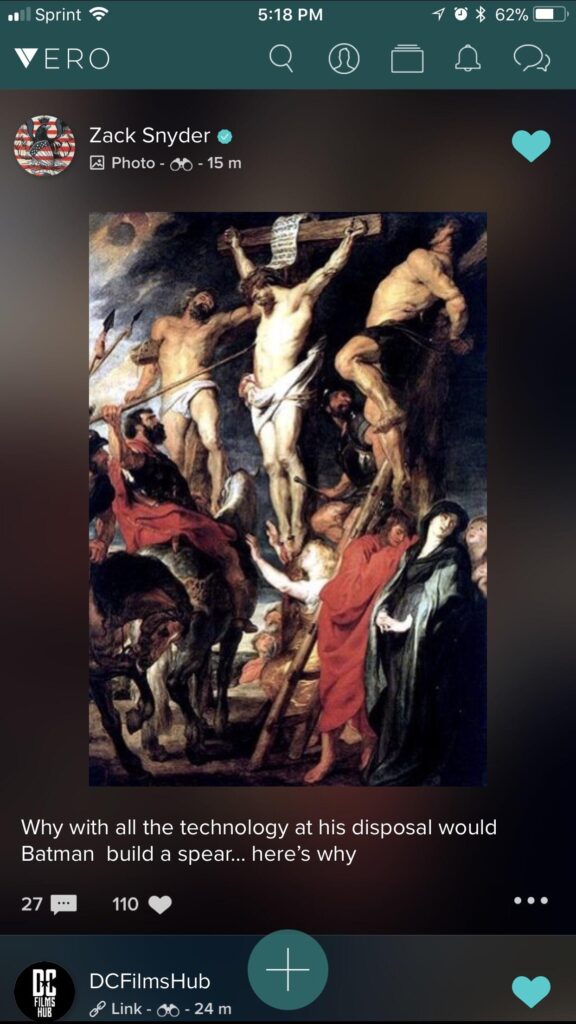
Again, back to the thesis, the general audience, due to theological apathy and biblical illiteracy, did not understand the religious discussion going on within Batman V Superman! When one grasps the imagery and the tough questions that the movie asks, the movie becomes so much more than just a superhero blockbuster movie. It becomes an exploration of the rejection and willful death of the Godman who became incarnate to bear the problem of evil itself and to redeem those who were lost.
The Justice League as Christian Saints
Batman is the one who was redeemed by the Godman. At Clark Kent’s funeral, the hymn “Amazing Grace” plays in the background. The lyrics go as follows:
Amazing grace how sweet the sound
That saved a wretch like me
I once was lost, but now I’m found
Was blind but now I see
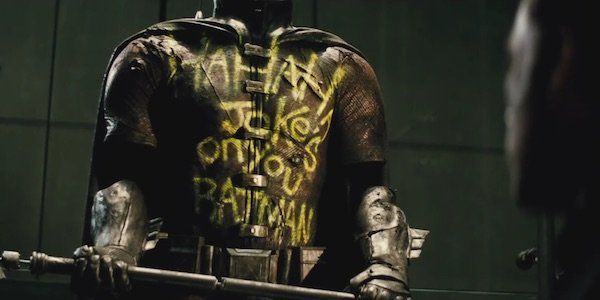
Batman had become cruel; he had become an Übermensch who thought he could will to power his way out of his nihilism. Bruce Wayne was a wretch who branded and killed his enemies, but he was changed by the Godman. One could say that he was as blind as a bat, but now he sees.
Bruce Wayne, while talking to Diana (Wonder-Woman), states, “I’ve failed him… in life. I won’t fail him in death. Help me find the others like you.” Batman, who failed the Godman, is now honoring him with his life and is commissioned to find the others (the Justice League); one could say that he embarks on a great commission to find those that have been called by the death of the Godman, leaving them an example, so that they might follow in the Godman’s steps.
However, the Justice League knows that they cannot do this without Superman. Bruce states in the Justice League, “The world needs Superman… the team needs Clark.” Even the villains know that Superman is needed. Steppenwolf, in the Justice League, only comes to earth due to Superman’s death. He says, “No protectors here. No Lanterns. No Kryptonian. This world will fall, like all the others.” Without Christ, our world will fail. But Bruce knows that the death of the Godman is not where the story ends.
The Second Coming
In the ultimate edition of Batman V Superman, the Priest during Clark Kent’s funeral cites Isaiah 26:19: “But your dead will live, LORD; their bodies will rise — Let those who dwell in the dust wake up and shout for joy — your dew is like the dew of the morning; the earth will give birth to her dead.”
In the Justice League, Bruce Wayne and the team believe that Superman will be resurrected and will come again. Alfred asks Bruce how he knows this, and Bruce responds, “Faith, Alfred, Faith.” Now, contrast this with where our current culture is at. I find a quote from Friedrick Nietzsche to be helpful:
‘Whither is God?’ he cried; ‘I will tell you. We have killed him – you and I. All of us are his murderers… Whither is it moving now? Whither are we moving? Away from all suns? Are we not plunging continually? Backward, sideward, forward, in all directions? Is there still any up or down? Are we not straying, as through an infinite nothing? Do we not feel the breath of empty space? Has it not become colder? Is not night continually closing in on us? Do we not need to light lanterns in the morning? Do we hear nothing as yet of the noise of the gravediggers who are burying God? Do we smell nothing as yet of the divine decomposition? Gods, too, decompose’.2
The beginning question, “after 75 years, is Superman still our hero?” is one that I think our culture answers in the negative. In the Justice Leage, Superman returns and states to Steppenwolf that he is a fan of truth and justice. In our postmodern world, truth and justice do not exist; rather they are merely social constructions. For us in the west, we live in a post-Christian world. This drift away from the Christian story has brought along with it skyrocketing numbers of nihilistic behaviors. It has brought with it a meaning crisis where we are drifting in purposelessness. It has brought a world where the death of our loved ones feels meaningless and which forces us to will-to power fake meanings to cope with the Problem of Evil or forfeit, because there is no problem to be fixed, since problems imply purpose and teleology to which our current story provides none. We now live in a world where demons flourish because they smell the “decomposing God” that we have “killed”.
While Batman V Superman is a fictional comic book movie, the Christian story is our reality. Christ did in fact historically die, was buried, and rose to life, and shall return. In the meantime, how do we make the Godman desirable once again? We make Him desirable by putting on Christ, just like we put on the S of Superman, by having faith like Batman, and by following God’s Great Commission to find those that are to follow in the Godman’s steps. As we participate in the life of God, as Christ redeems our fallen human nature, and as we defeat the Problem of Evil, we shall see a culture that is as blind as a bat become awed with the grace and love of their savior.
Comments Off on Batman V Superman (2016) and its Missed Theological Message – Part 2