Category: Movies

Ant Man and The Wasp

Ant-Man and the Wasp was definitely a surprise for many critics and audiences, as it was slightly less conventional than your average superhero movie with black-and-white protagonists and antagonists. Everyone is fleshed out in the film as all having very believable motives for wanting the same thing.

6.5/10

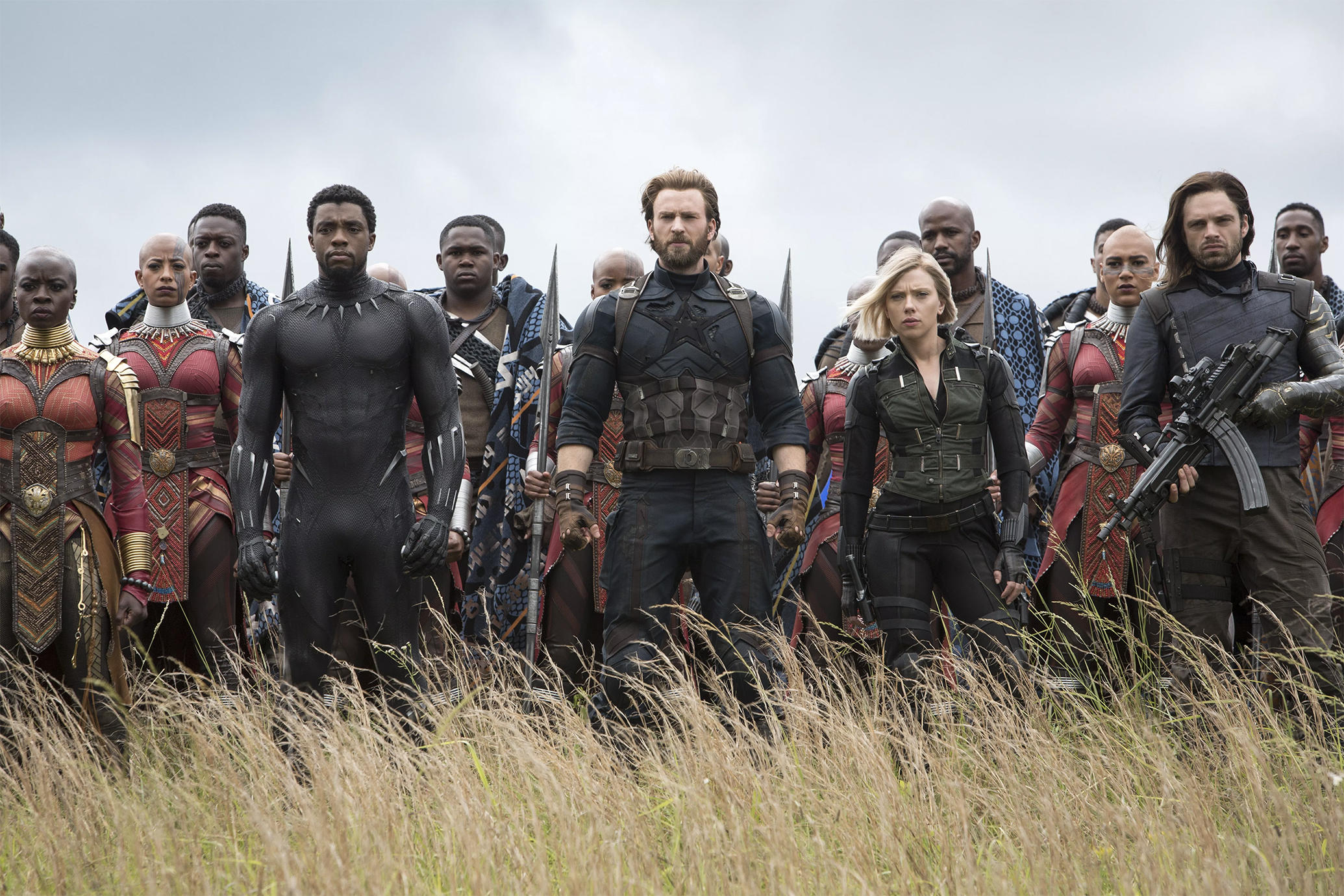
After an exhausting battle with Captain America and the Avengers, Scott Lang, known as Ant-Man, finds himself under house arrest. But no sooner does he settle in before he finds himself in yet another adventure, as he assists his old mentor, Dr. Hank Pym, in rescuing his wife from a mysterious place called the Quantum Realm by building a gate to get there. Ant-Man and friends are in for a bumpy ride, though, as two other characters, with very different motives, seek to obtain that same gate.
Ant-Man and the Wasp was definitely a surprise for many critics and audiences, as it was slightly less conventional than your average superhero movie with black-and-white protagonists and antagonists. Everyone is fleshed out in the film as all having very believable motives for wanting the same thing. The movie turns into a game of cat-and-mouse as our characters scramble for access to the quantum realm in a comedic but compelling way. The film’s biggest weakness was that it did not really feel like Ant-Man’s film; the movie was really about Hope, the Wasp, and finding her mother. Even the side characters had bigger goals and arcs than did Scott. There was, perhaps, something there in Ant-Man’s journey in the film that could have been fleshed out a little better, while not at the expense of the rest of the story, but it seemed like a missed opportunity. Overall, Ant-Man is not a complete waste of time, and holds audiences over after its amazing predecessor, Infinity War.

Many Redemptions

All the characters are in some need of redemption. Firstly, the film centers around the restoration of a lost loved one back from a mysterious realm. At the same time, our main character, Scott Lang, is seeking to be accepted by the people he loves after a series of poor decisions; Ant-man also struggles with his identity as a superhero, not being as powerful as he wants to be; and to make matters worse, his romantic relationship with Hope (Evangeline Lily) is suffering. The cherry on top of all this is an angry character searching for a shot at normalcy, after a tragic explosion has rearranged the molecular structure of her body. What’s really compelling is that there is no actual “villain”, though there is a character who has plunged headlong into love for money, having passed his moment of redemption, and now pursuing a criminal life.

There is much truth here to contemplate for the believer. When Christ restores us, he restores multiple areas of our lives. The film shows a myriad of people who are, together, caught in a web with their own losses and agendas. Christ brings together loved ones in eternity, restores broken romantic relations, restores human identity through sanctification, and establishes normalcy in a life mauled by the effects of the fall. He even holds out his arms for those who still reject righteousness for money while remains the day of grace. The godly may meditate on this film and remember that just as sin affected all areas of life, so also does the redemption of the Lord Jesus Christ. As Van Til once said, “The sweep of redemption is as comprehensive as the sweep of sin.” What was brilliant about this film is that depicts life as it often is: a compilation of hurting people seeking their redemption. The Christian worldview responds by saying that all forms of redemption are echoes of that eternal reality that is in Christ Jesus.

Cornelius Van Til, Christian Theistic Ethics (Phillipsburg, New Jersey: Presbyterian and Reformed, 1980), 86-87.

Comments Off on Ant Man and The Wasp

A Spark of Hope: The Last Jedi Review

This is the most spiritual of any Star Wars film. Luke Skywalker even refers to “the Jedi religion” (a term not used since A New Hope). There are many things one could discuss from The Last Jedi, but at its heart it is about restoring lost faith and the rekindling hope in the midst of despair.

Last Jedi is not a perfect film, but it is truly great at times. It is the most visually beautiful Star Wars film we have ever seen. It has one of the best space battles and one of the best lightsaber battles of any Star Wars film. It is thematically rich and gives strong interesting character arcs to Luke, Rey, and Kylo. Kylo/Ben Solo is one of the most interesting villains I have seen on screen in the last decade. The Last Jedi features some of the best acting of any Star Wars film as well. Adam Driver gives a mesmerizing performance as Ben Solo. Mark Hamill and Daisy Ridley also give very strong performance. I cannot recommend The Last Jedi enough. Some do not appreciate what Rian Johnson did with Luke’s story, but I think it is a magnificent end to such a great hero. I highly recommend The Last Jedi. It is a remarkable Star Wars film, that is both a true Star Wars film, and surprisingly new.

Spoilers follow….

This is the most spiritual of any Star Wars film. Luke Skywalker even refers to “the Jedi religion” (a term not used since A New Hope). There are many things one could discuss from The Last Jedi, but at its heart it is about restoring lost faith and the rekindling hope in the midst of despair.

In the iconic opening crawl, we read in bold yellow script the Resistance is waiting for Luke Skywalker to “return and restore a spark of hope to the fight.” Evil has arisen again. Hope is dwindling. The galaxy is need of something to rekindle hope. Rey goes in search of this hope, but instead of finding Luke, mighty legend, she found a broken man of lost faith.

Luke

Luke Skywalker is a man adrift. In a moment of weakness, Luke had contemplated killing his nephew, Ben Solo because he could see the potential of great evil in Ben. Luke ultimately did not give into the temptation, but by simply lighting his lightsaber he set off a chain of events wherein, Ben Solo went over to the dark side and Luke’s other students were killed or joined Ben. Luke had failed himself, his sister, his best friend, his nephew, his students, and the galaxy. His failure led him to despair. He lost faith in the Jedi way and walked away from it all.

Rey begs for Luke to return to the fight. In brilliant foreshadowing Luke ask Rey, what she expects of him, “To show up with a laser sword and face the entire First Order” (the exact thing Luke does at the end of the film). Luke does not think the galaxy needs him anymore, but Rey wisely says they still need a legend.

Later in the film at the moment where all hope seems lost (Leah actually says hope is gone), Luke Skywalker walks into the room. Luke after his time with Rey and some counseling from an old friend, has his faith restored. He will not be the last Jedi. They will continue through Rey. Luke confronts Ben Solo and the First Order to provide time for the Resistance (should we call them Rebels now?) to escape.

In confronting Ben and the First Order, Luke becomes a legend once again. He is the spark that rekindles hope in the galaxy, as is wonderfully shown through the kids telling the story of Luke Skywalker at the end of movie. In a powerful display of the force, Luke sacrifices his life to save the Resistance, Leah, and Rey. In Luke’s final act of sacrifice he has become greater than he was before, and he has brought hope to a galaxy in desperate need of it.

Why would Rian Johnson tell this story? Why do so many respond to this message of hope in the face of despair? We live in a world full of darkness. We hear wars and rumor of wars; racism, natural disasters, and oppression seem to abound.

The world is in desperate need of hope. 2017 was a very difficult year for many people. Despair is on the rise, and all seems lost.

In his essay On Fairy-Stories Tolkien introduces the term eucatastrophe which is a sudden unexpected turn to joy in a story. When Luke arrives at the old Rebel base, The Last Jedi experiences eucatastrophe. All is hope seems lost, but then an unexpected change comes in the story. Luke comes, saves the Resistance, faces the New Order and brings hope to the galaxy. In a same manner the history of humanity has its own moment of eucatastrophe in the arrival of Jesus Christ.

In the epilogue of his essay On Fairy-Stories Tolkien argues that the Incarnation is the eucatastrophe of mankind’s history, and the Resurrection is the eucatastrophe of the Incarnation. When all seemed lost, Jesus the hero of our story has stepped in and conquered evil and the grave for us so that we might have life, light, and hope. I believe as Tolkien believed that Christians should never live in despair, because despair is the absence of all hope, but in Christ we always have a hope no matter how dark things may seem. Our story has already unexpectedly turned to joy.

There is much more one could discuss about The Last Jedi and its themes of hope, faith, and love. However, I will end with two of my favorite lines from the film which beautifully capture the heart of the film.

“Hope is like the sun. If you only believe it when you see it you’ll never make it through the night.”

“We’re going to win this war not by fighting what we hate, but saving what we love.”


Comments Off on A Spark of Hope: The Last Jedi Review

Running Towards Reality: A Review of Blade Runner 2049

I was delighted to find that Villeneuve delivered a worthy successor in Blade Runner 2049.

The cult classic Blade Runner is arguable one of the most influential films in cinema. It has inspired countless directors and movies, and is studied extensively in film schools. Making a sequel to such a film is a risky venture, but I was delighted to find that Villeneuve delivered a worthy successor in Blade Runner 2049. Villeneuve effectively captures the mood and aesthetic of Blade Runner through the stunning cinematography of Roger Deakins (hopefully this will finally earn him a much deserved Oscar for best cinematography), and evocative score of Benjamin Wallfisch and Hans Zimmer. Villaneuve follows and builds on the themes of the original film without retreading. Villaneuve extracts superb performances from all his actors with Harrison Ford giving one of his best performances ever.

Villeneuve effectively captures the mood and aesthetic of Blade Runner through the stunning cinematography of Roger Deakins (hopefully this will finally earn him a much deserved Oscar for best cinematography), and evocative score of Benjamin Wallfisch and Hans Zimmer. Villaneuve follows and builds on the themes of the original film without retreading. Villaneuve extracts superb performances from all his actors with Harrison Ford giving one of his best performances ever.

It is refreshing for a director to take long cuts, and to linger the camera on the actors and scenes, but there are places where the movie could be tightened up for a shorter run time. Blade Runner is rated R for some strong language, violence, and some unnecessary nudity.

Blade Runner 2049 is an excellent film. It is meant to be seen on the biggest screen one can find. It is as good as the original, and some could argue that it surpasses its predecessor. I recommend it to those who enjoy thoughtful and original sci-fi films.

Spoilers follow….

There are so many ways one could go in discussing the deep philosophical and thematic currents of Blade Runner 2049. What is a soul? What does it mean to be human? What does it mean to be free? These are just some of the questions raised and explored in Blade Runner. Blade Runner does not provide trite solutions to such difficult problems. It invokes without answering in full. The most compelling question raised in Blade Runner revolves around the simple question, “what is real?”

This theme is pops up constantly in the dialogue. “We’re all just looking out for something real;” “I have memories, but I can’t tell if they’re real;” “It’s real. Someone lived this;” “is he real? I don’t know, ask him;” “I know what’s real.” The noetic effects of the fall are painted all over the screen. One cannot always be sure who is human or replicant (thankfully 2049 leaves open whether Deckard is or not). K cannot even trust his own memories, because they could have been manufactured and implanted. K at one point comes to believe that he is one person, only to later find out he is not who he thinks he is.

Worldviews present descriptions about the nature of reality. They make truth claims over what is real and what is not. In different ways Blade Runner 2049 ask us what does it mean to be human, what is the soul, what is right and wrong, and what is love? It displays a deep longing for real true loving relationships. I submit that other worldviews give bad answers to these fundamental questions, but in Christianity we find the fullest, richest, most accurate picture of reality.

We find a world in which there is objective truth, goodness, and beauty. It does not hide from evil nor deny its existence, but instead confronts evil. Christianity demands justice for evils committed, but desires mercy and grace for the weak and repentant. It affirms the soul and intrinsic worth of every person’s life. It revels in the awe of the grandeur of the natural world. It longs for restoration and reconciliation. Christianity puts all its hopes in a historic fact of a resurrection. It tells us that there is more to life than just this. Christianity answers all of these questions in the person of Jesus Christ who is the way, the truth, and the life; the image of the invisible God; the radiance of God’s glory and the exact expression of his nature.

In asking the question, what is real, we express our longing to know who we can trust. K could not trust his own memories. He found more real connection with a hologram than with people. He questioned whether a dog was real or not. Blade Runner 2049 pushes us to ask who or what can we trust. Christianity answers that in Jesus we find the ultimate trustworthy one who will never lie. The enemy comes to deceive, but Jesus is the light who reveals all truth. In him we discover what is real.

“In asking the question, what is real, we express our longing to know who we can trust. The enemy comes to deceive, but Jesus is the light who reveals all truth. In him we discover what is real.”


Comments Off on Running Towards Reality: A Review of Blade Runner 2049

Overcoming the Horror of It

A good horror movie has value because it reveals something about the nature of humanity. They expose deep-seated fears, and provide a canvas for exploring the nature of evil. They accept that at a fundamental level evil does exist. Pennywise is true evil. There are no moral relativists in a horror film.

Last weekend experienced a surprising box office phenomenon with the move It, which made $123 million dollars in its opening weekend! It had the highest opening for any horror film ever. If It had opened during the summer it would’ve already become the tenth highest grossing film of the summer. No one could have predicted the wild success of It.

Warning: It should be noted that It is rated a hard R. The kids in the movie often use strong language, and make crude jokes. There are moments of strong gore, and intense horror sequences. It is definitely not appropriate for children. This movie is not for everyone, but Christians should be aware of this film because of its huge appeal in modern culture.

I personally loved this film. It will probably go down as one of my favorite horror movies of all time. The movie is surprisingly hilarious with whip-sharp dialogue. The casting director deserves an award, for perfectly casting each and every child actor who all give fantastic, believable performances. Bill Skarsgård is otherworldly terrifying as Pennywise. The score is wonderfully nuanced. The director creates a tense mood of dread. It is a tense and psychologically terrifying film, though it does include some effective jump scares. Most importantly, It is a well told story with meaningful themes and character arcs. I would recommend It to any Stephen King fan, any horror movie fan, or fans of good films in general, who are not bothered by language or intense sequences.

Spoilers follow….

The movie It would be better understood as a fantasy allegory exploring themes of becoming an adult, childhood abuse and trauma, courage, love, and friendship. Pennywise is a shape-shifting monster that feeds on the fears and flesh of children. Pennywise seemingly is able to peer into the souls of children to discover their deepest fears. He then either shape-shifts into that fear or is able to produce a psychological effect on the children where they see whatever horror he has concocted. In this way, Pennywise is the embodiment of fear. Pennywise gleefully toys with the children’s emotions and fears.

Bill, stalwart leader of the Losers, is traumatized by the grief of his missing younger brother, Georgie. Pennywise preys upon Bill’s grief and sense of responsibility for Georgie. Beverly, the tough but kind girl of the group, is traumatized by her abusive father and the fear of entering womanhood. Wise-cracking Richie, is afraid of clowns and going missing himself. The courageous Mike is traumatized by the death of his parents due to fire. The practical Stanley is afraid of a creepy painting in his father’s study. Smart and sensitive Ben, is afraid of dead children and hypochondriac Eddie is a real germaphobe. All of these fears feel real. I left the film wondering what shape Pennywise would take to terrify me. What am I truly afraid of?

A good horror movie has value because it reveals something about the nature of humanity. They expose deep-seated fears, and provide a canvas for exploring the nature of evil. They accept that at a fundamental level evil does exist. Pennywise is true evil. There are no moral relativists in a horror film.

My favorite scene in It occurs directly after the Losers defeat Pennywise. Bill finds Georgie’s jacket. He breaks down weeping. The other children gather around Bill, embracing him in friendship and love. This touching scene displays the greatest strength and lesson of It, friendship. It is only through the power of friendship and love that they are able to overcome their worst fears and overcome Pennywise.

This movie displays that in community we can overcome many great evils. I was reminded again, that Jesus has called his people to be together. We are commanded to not forsake the gathering of ourselves together; to bear each other’s burdens. We cannot go it alone. The Christian faith is meant to be walked in community. We are at our greatest when we are together. In Christian community we can be a light that holds back the dark. In the face an evil world we have the hope of a savior who will one day vanquish all evil. It reminds us that the world is currently wicked, but also prompts us to look to the Light that has overcome the world.

“Good horror movies accept that at a fundamental level evil does exist. There are no moral relativists in a horror film.”


Comments Off on Overcoming the Horror of It

Caesar: The Simian Moses?

War of the Planet of the Apes emotional power is the use of the Exodus narrative structure. Caesar’s story affects us because we recognize within his story our story. We long for rescue and a promise land where we can be free.

Amid mostly mediocre blockbuster fare, War for Planet of the Apes shines. Director and co-writer Matt Reeves has crafted the best movie of the summer. War for Planet of the Apes concludes the Caesar trilogy and in my opinion will eventually be considered one of the greatest trilogies of this generation.

Caesar, the sentient ape and central protagonist is one of the most complex characters in film. Andy Serkis is brilliant as the noble and wise, but war-weary leader Caesar. Thanks to cinematographer, Michael Seresin, War for Planet of the Apes is absolutely stunning, providing a very different look from most blockbusters.  I cannot recommend this movie enough. Please go see it in theaters, we need more movies like this.

Spoilers Follow…

There are so many things I could comment on for War of the Planet of the Apes but it feels appropriate to focus on Caesar. Reeves is clearly drawing from a number of stories such as Apocalypse Now and Clint Eastwood westerns, but the strongest seems to be from the biblical Moses. Caesar gives the law, for example “ape no kill ape.” The apes are forced into backbreaking slavery to build an artifice for the humans, much in the same way the Israelites were forced into slavery by the Egyptians. When Caesar sees one ape being cruelly whipped, he stops it by speaking out, similar to how Moses speaks out for his people.  Caesar leads his people out of captivity. The enemies of Caesar are wiped away by a sea of snow. Caesar leads his people through a desert to a promise land. Caesar’s anger causes Caesar to fail, which leads to him being mortally wounded. Therefore Caesar sits atop a hill and looks out onto the promise land, but does not enter it, much in the same manner Moses’s anger prevents him from being allowed into the kingdom. Caesar is a simian Moses.

Part of War of the Planet of the Apes emotional power is the use of the Exodus narrative structure. Caesar’s  story affects us because we recognize within his story our story. There too is a war in our souls between mercy and revenge. We innately know the exilic story. We are held captive by our sinful nature, oppression, and death. We long for rescue and a promise land where we can be free.

The Bible story points us to our need. We are exiled captives caught in our sin. In Jesus, as with Caesar and Moses, we find a hero who came to set the captive free. Jesus is our savior who lifts us out of our fears, sinfulness, and oppression. Jesus will lead us into the ultimate promise land. Where Caesar and Moses failed, Jesus does not fail. In Jesus mercy and justice meet. We resonate with Caesar because many of his desires are our own. He draws on our recognition that there is something wrong with this world. Caesar represents our desires for mercy, justice, peace, and rest. The biblical story reveals to us that only in Jesus our exilic narrative will find complete resolution. Where the promise land of War of the Planet of the Apes is fleeting, through Jesus we will enter an eternal promise land where we will be free and find rest.

“We are exiled captives caught in our sin. In Jesus, as with Caesar and Moses, we find a hero who came to set the captive free. Jesus is our savior who lifts us out of our fears, sinfulness, and oppression. Jesus will lead us into the ultimate promise land. Where Caesar and Moses failed, Jesus does not fail.”

Comments Off on Caesar: The Simian Moses?

Spidey Powers and a Fancy Suit Don’t Make a Hero

At its core Spider-Man: Homecoming ask one question, “what does it mean to be a hero?”

Spider-Man is my favorite superhero of all time. I am, therefore, happy to say that Spider-Man has come home at last! In Tom Holland we finally find a great portrayal of the comic book Spider-Man. Holland shines both as the dorky, smart, insecure Peter Parker, and the wise-cracking, superpowered hero. Holland is supported by a strong cast who act, talk, and feel like actual teenagers, as well as, a fantastic turn by Michael Keaton. There are things I could nitpick, but Spider-man is such a blast to watch, it is easy to forget the quibbles. I highly recommend seeing Spider-Man: Homecoming on the biggest screen you can in theaters.

Spoilers Following:

At its core Spider-Man: Homecoming ask one question, “what does it mean to be a hero?” At one point in the film Tony takes back Peter’s suit.  Peter pleads, “But I am nothing without this suit.” Tony wisely responds, “If you are nothing without the suit, then you shouldn’t have it.
In a sudden turn later in the film Toomes discovers Peter is Spider-Man. Toomes gives Peter 2 choices, either leave him alone, or he will kill Peter and everyone he loves.

Donning his original suit Peter chooses to confront Toomes. Peter becomes pinned under massive pile of rubble. Holland superbly portrays a scared kid stuck, crying out for someone to come help. Looking at his mask on the floor, a flashback of Tony Stark says, “If you are nothing without the suit, then you shouldn’t have it.” Peter then says, “come on Peter,” and then switches to, “come on Spider-Man, come on Spider-man.” Spider-Man triumphantly lifts the heavy rubble and escapes to continue to fight the Vulture.

The film suggest this is where Peter becomes a hero. I believe it misses what makes someone truly heroic. Furthermore, it lacks an essential part of what makes Peter Parker so special. A friend rightly pointed out to me that using Tony Stark’s quote here changes the message. It makes heroism about believing in yourself and having powers to overcome physical obstacles. But is this what it means to be heroic? I think not. Heroism is found in self-sacrifice, a refusal to give up, and a sense of duty to do what is right.  Heroism is a recognition that, “with great power comes great responsibility.”  Jesus is the hero of the Bible. His heroism is in his humility, his goodness, and his sacrifice for the good of others.

The Bible teaches that all believers have been given gifts and skills. Spider-Man presses us to recognize that we are responsible to use these good gifts for God. God has given us a heroic calling to serve him, his Church, our communities, and to expand his kingdom to the ends of the earth will we be heroic like Spider-Man and take on our responsibilities? Will we answer the call?

“God has given us a heroic calling to serve him, his Church, our communities, and to expand his kingdom to the ends of the earth will we be heroic like Spider-Man and take on our responsibilities? Will we answer the call?”


Comments Off on Spidey Powers and a Fancy Suit Don’t Make a Hero

Type on the field below and hit Enter/Return to search