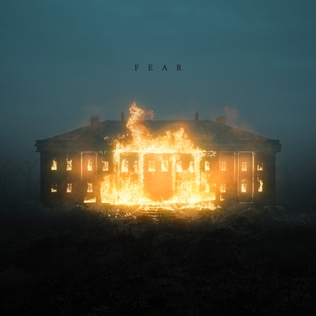
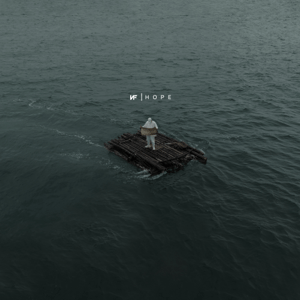
I, as a fan of NF, was excited for his EP FEAR (2025) that was released a couple of weeks ago; however, I was surprised by its content. NF has always struggled with his mental health, but in his album HOPE (2023), he portrayed himself as overcoming fear. He had found a map to hope, he had finally forgiven his mom in his song “MAMA” (something he could not do in his song “How Could You Leave Us”), and he portrayed himself as joyful and content within his career in the song “MOTTO”. Most importantly he had finally outrun his depression and fear in his song “RUNNING”:
I wish you well, but I can no longer stand aside And watch you sabotage the two of us I love you to death, but I can’t spend the rest of my Life in this darkness, I’m done I’m done1
To fully understand the significance of NF’s newest EP, we should go back to the beginning. Before he was under the name NF, he had made a Christian rap album titled Moments (2010) under his actual name Nathan Feuerstein. Once he was under the name NF, he stopped being a “Christian rapper” but still leaves traces of his faith throughout all his music. In his song “Mansion” he opened up about the abuse that he faced at the hands of his mother’s boyfriend, discusses his mother’s death, and discusses his loneliness. He also portrays his mind as a mansion, and it is here where fear is introduced into his discography:
Fear came to my house years ago, I let him in Maybe that’s the problem, ’cause I’ve been dealing with this ever since I thought that he would leave, but it’s obvious he never did He must have picked the room and got comfortable and settled in Now I’m in the position, it’s either sit here and let him win Or put him back outside where he came from, but I never can ‘Cause in order to do that I’d have to open the doors Is that me or the fear talking? I don’t know anymore1
He then went on to compose the song “Therapy Session” where he discusses how music is a gift from God. He says:
Like, this is something that personally helps me as well I’m not confused about who gave me the gift God gave me the gift and He gave me the ability to, to do this And He also gave me this as an outlet And that’s what music is for me2
NF’s music serves as an outlet for his struggles and even functions as a way to relate to God. In his album Perception (2017), we got a taste of hope for NF as he buried fear in his song “Intro 3”. It is also here where he introduced the keys that reappear throughout his music. In his album The Search (2019), he started the journey of finding hope. In The Search we got hopeful songs such as “Change” and “The Search”, but we also got vulnerable and despairful songs such as “Trauma”, “Hate Myself”, and “Let Me Go”. In the album HOPE, which is mentioned above, he began to produce more positive songs.
In his newest song “FEAR” we learn that fear has been unburied, that NF is struggling again with his OCD, and that NF has relapsed. Referring to the song “RUNNING” he says:
Told the world that I was sick of runnin’, then went back to runnin’, what a joke Disappointed, yeah, me too, I thought I finally had finally made a breakthrough, guess not3
The Chorus then begins a discussion with God:
Standing back, watching my mansion burn to ash while I Hold the gas can, asking God if He started this fire Is this what You wanted? Is this what You wanted?4
NF poses a great question, does God cause the burning of some of our “mansions”? I think sometimes yes. C.S. Lewis thought that his grief over his wife’s death was an opportunity for God to knock down his “mansion”. Lewis writes, “He always knew that my temple was a house of cards. His only way of making me realize the fact was to knock it down.”5 The Apostle James writes, “Consider it pure joy, my brothers and sisters, whenever you face trials of many kinds, because you know that the testing of your faith produces perseverance” (James 1:2-3). While James is writing to persecuted Christians, I do think this passage can be applied for all kinds of trials. I think NF even realizes in his song “WASHED UP” that God is at work within his trials:
The Lord knew I needed this to survive the violence The raw truth, I’m nothin’ without the Father’s guidance6
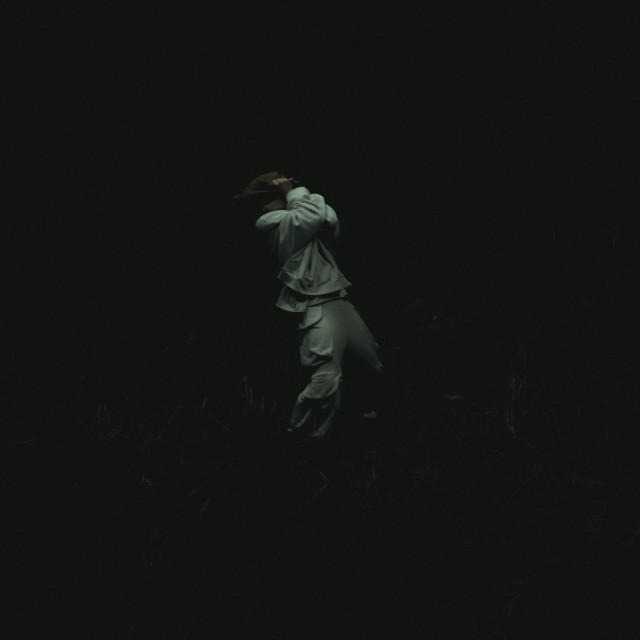
The “this” he needed to survive the violence is music, and he realizes that without the father’s guidance and gift of music, he would be nothing. One could even say that music is an instrumental cause or tool of sanctification for NF. If he is guided by the Father and the Father is the one who “started the fire” then could the burning of the mansion be something good? Could the burning of the mansion be an act of conforming one’s mind to a new foundation as the Apostle Paul tells us to do? In the music video for “HOPE”, NF, as the hope character, is outside of the mansion but gets pushed back into the mansion by fear. In “Mansion” NF wanted the mansion to be burned down:
Wish I could take a match and burn this whole room to the ground Matter of fact, I think I’ma burn this room right now So how this memory for some reason just won’t come down7
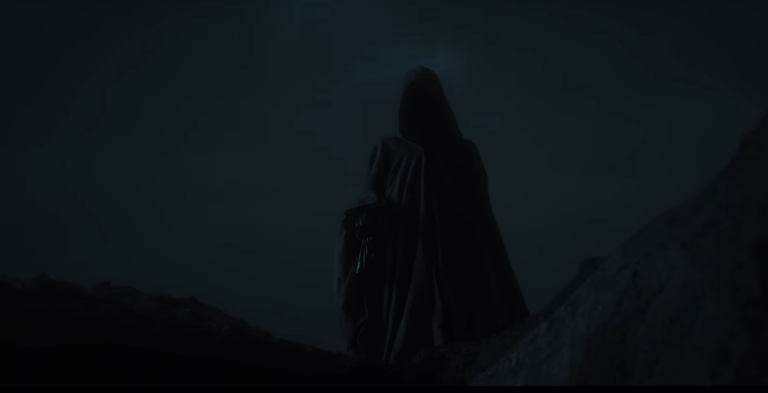
In the music video for “WASHED UP” it is not fear who burns the mansion; it is a new grim reaper character. Some fans have theorized this is NF’s anger, death itself, or simply NF. In “FEAR” it is hope who holds the gas can. Who is burning the mansion? Is it God, NF, hope, death, or anger? NF also repeatedly asks if this is what God wants:
Make all my hopes and my dreams come to life just to lay them to rest Is this what You wanted? Is this what You wanted? Give me a false sense of peace just to show me what peace really is Is this what You wanted?8
What is this false sense of peace? I think he provides room for speculation as he ends “WASHED UP” with asking:
Am I on the brink of somethin’ great Or have I lost it? Am I on the verge of makin’ waves Or am I washed up?9
It seems that NF no longer has peace due to his worry that he is washed up. Is NF’s peace in his career or is it in Christ? Ultimately, these questions that I propose will not be answered by me, so I leave them for NF to hopefully answer them in an upcoming album. But I do wish to make two key points about NF’s struggles.
Christian Culture’s Need For REALNESS
Even if NF’s peace is in Christ, that does not mean that he should not be relapsing. Growing up as an NF fan, I remember that some people thought that Christians should not listen to NF due to his music being too depressing. However, his authenticity, honesty, and vulnerability ought to help Christians. One third of the Psalms, which are music, are laments. We find many Psalms such as Psalms 3, 13, 22, 42, and 44 comforting even though they can be perceived as depressing. Psalm 88 is one of the most depressing as it ends with the author saying that darkness is his only friend. Ecclesiastes is known for its depressing character; however, it too is therapeutic. Jesus Himself is authentic and does not hide his emotions from God. Fulfilling Psalm 22 He asks, “my God, My God, why have you forsaken me?” (Matthew 27:46). The church, as the body of Christ, needs this authenticity and vulnerability!
I think a key aspect to NF’s success is his authenticity and vulnerability; he is REAL and people desire realness. Sadly, the church is not perceived as REAL. A 2024 study found that only 52% of individuals say that they think their church community has no stigma when it comes to mental health.10 This stigma is so prevalent within the church that NF left the Christian music industry because he felt his music did not fit the Christian mold.11 We often have a fear of how we are perceived within our church communities. If one admits that he is struggling, then he may wonder if his church community will shun him. However, David, a man after God’s own heart, never shied away from his struggles; his struggles even became a means of worship for Israel!
We must ask and discuss if the church makes room for questions, doubts, confessions, relapses, mental health, and thematically dark art as God gave us such artistic expressions as a therapeutic outlet. The church ought to be REAL and if the church cultivates this, then we can help those who are relapsing, who are struggling to overcome sin, who struggle with mental health, and who are wrestling with God. We need this because we all fit those descriptions; the question is, are we willing to be vulnerable enough to admit it and discuss it?



 Ellen Gore